
What “Whole House Power” Really Means in a Battery System
When people ask whether a home battery can power a whole house, they usually imagine running everything exactly as they do on the grid.
In reality, “whole house power” depends on system design, energy consumption, and load management, not just battery size.
A home battery system can power an entire house, but only if:
- The system is properly sized (kWh capacity)
- The inverter can handle peak loads
- Energy usage is managed intelligently
👉 The key question is not “Can it?” but “Under what conditions can it?”
What Determines If a Battery Can Run Your Entire Home
Daily energy consumption is the foundation
Every home has a different energy profile:
- Small home: 5–8 kWh/day
- Average home: 8–15 kWh/day
- High consumption home: 15–30+ kWh/day
If your battery system cannot match your daily usage, it cannot fully power your home.
Peak load matters more than people think
Even if energy capacity is sufficient, peak demand can break the system.
Common high-load appliances:
- Air conditioners
- Water heaters
- Electric ovens
- Water pumps
👉 These determine whether your system can “start” the load, not just run it.
Inverter capacity is often the limiting factor
Many users assume battery size is the main limitation, but in reality:
The inverter is often the real bottleneck.
Important factors:
- Continuous power rating
- Surge power capability
- Voltage compatibility
Even a large battery system cannot compensate for an undersized inverter.
Solar integration changes everything
If solar panels are part of your system:
- Battery does not need to cover full daily usage
- Solar offsets daytime consumption
- Battery mainly supports night + backup loads
👉 This can significantly reduce required storage capacity.
Realistic System Sizes for Whole House Power
5 kWh systems (Emergency backup only)
- Not suitable for full home power
- Limited to essential loads
- Short runtime (6–12 hours)
👉 Best for outages, not full independence
10–15 kWh systems (Partial whole house support)
- Can run most essential appliances
- Limited air conditioning usage
- Suitable for hybrid solar homes
👉 Supports “almost full home” but not unlimited usage
20–30+ kWh systems (True whole house backup)
- Can support full household operation
- Multiple appliances running simultaneously
- Suitable for off-grid living or extended outages
👉 This is the true “whole house” category
Why Many People Overestimate Battery Capability
Air conditioning is the biggest misunderstanding
Air conditioners consume far more energy than most users expect.
A single unit can:
- Drain a 10 kWh system in hours
- Require high surge power to start
👉 This is the most common reason systems feel “too small”
People ignore real usage behavior
Most sizing mistakes come from assuming:
- “I will use less electricity during outages” (not always true)
- “Only essential devices will run” (often unrealistic)
Surge power is overlooked
Some devices require 3–5x startup power:
- Pumps
- HVAC systems
- Refrigeration compressors
👉 Energy capacity ≠ power delivery capability
When a Home Battery CAN Fully Power a House
A battery system can realistically power a whole house when:
- Energy usage is moderate or well-managed
- Peak loads are controlled or staggered
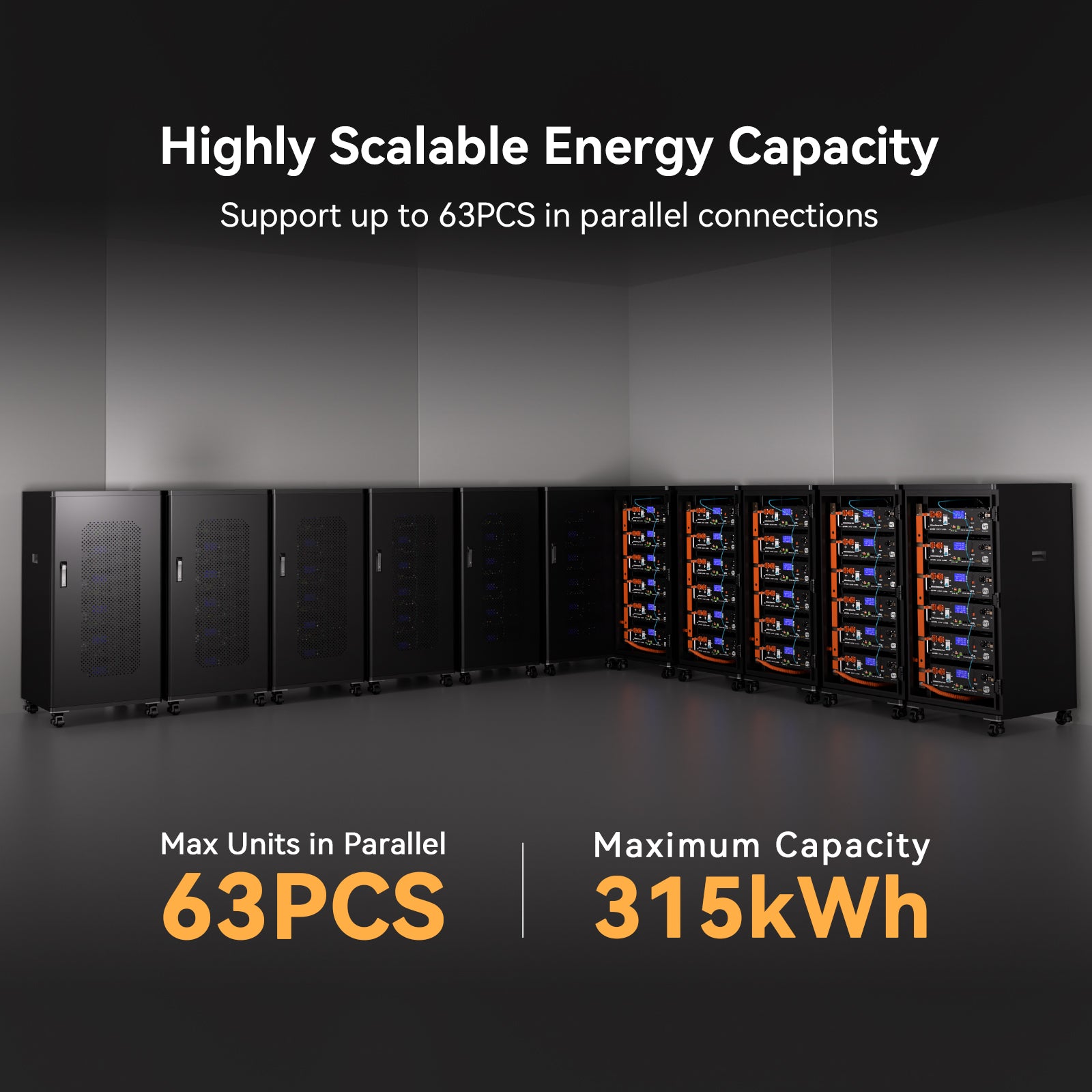
- System capacity is 15–30+ kWh
- Inverter is properly sized
- Solar is integrated (recommended)
👉 In this configuration, grid independence becomes realistic.
When It CANNOT Fully Power a House
Even large systems may fail if:
- Air conditioning runs continuously without limits
- Inverter is undersized
- No load management is applied
- Battery system is too small (<10 kWh for high usage homes)
👉 The system is only as strong as its weakest component.
Practical Home Energy Strategy (What Actually Works)
Instead of trying to run everything at once, most successful systems follow this approach:
- Prioritize essential loads first
- Use solar during daytime
- Store energy for night usage
- Limit high-load simultaneous usage
👉 This is how real off-grid and hybrid homes operate efficiently.
Choosing the Right System for Whole House Backup
Small households or light usage homes
- 5–10 kWh may be sufficient with solar support
Average family homes
- 10–15 kWh for partial independence
- Hybrid solar recommended
High consumption or full independence
- 20–30+ kWh system required
- Strong inverter + solar integration essential
Conclusion: Can a Home Battery Power a Whole House?
Yes—but only under the right conditions.
A home battery system can fully power a house when:
- It is correctly sized for real energy consumption
- Peak load and surge power are properly handled
- Solar integration supports daily demand
- The system is designed as a complete energy ecosystem, not just a battery
👉 The key is not just storage capacity—it is system balance.


Share:
What You Should Know Before Buying a Home Battery System
48V vs 51.2V LiFePO4 Battery: What’s the Real Difference?