




FAQs
Will one 12kW inverter run my whole house?
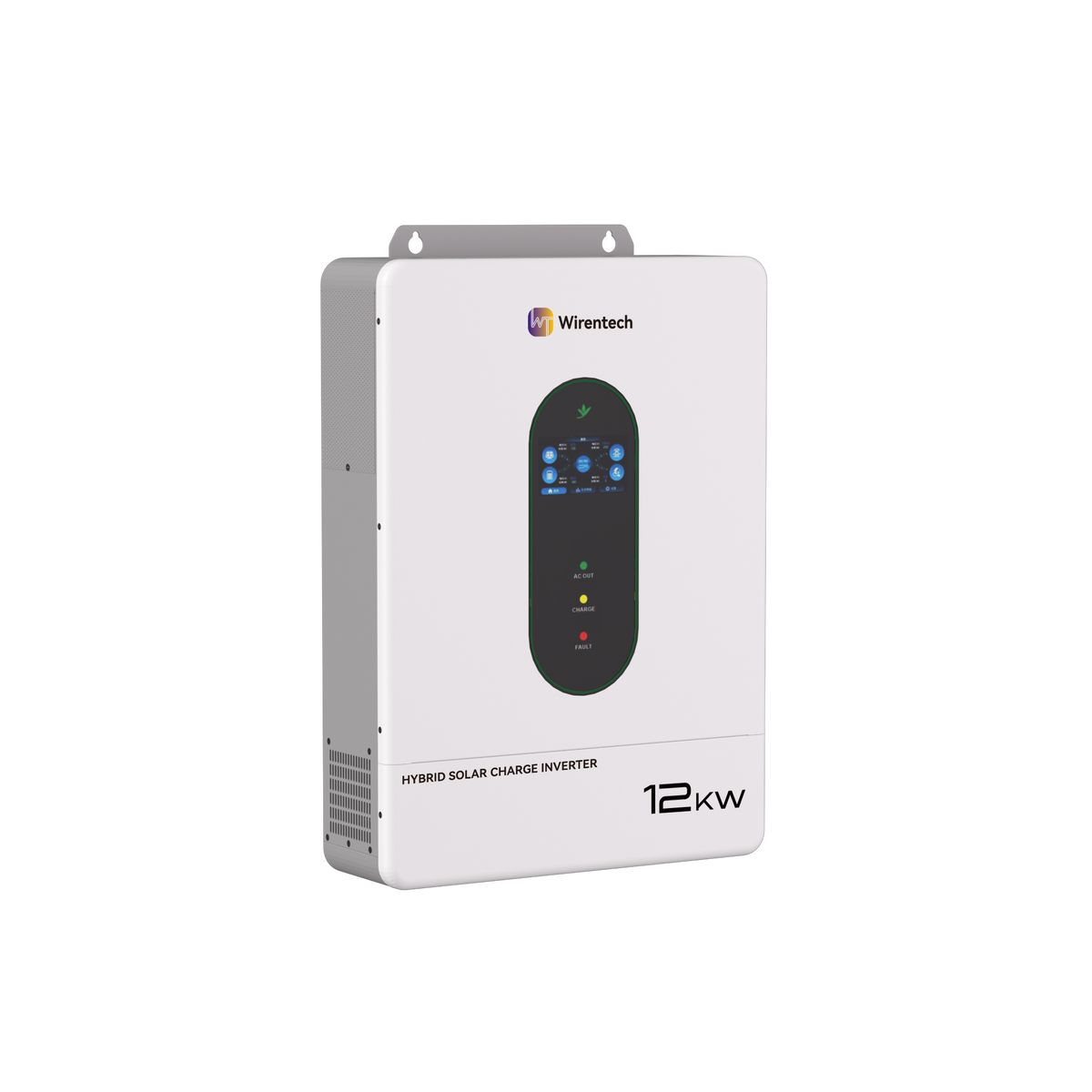
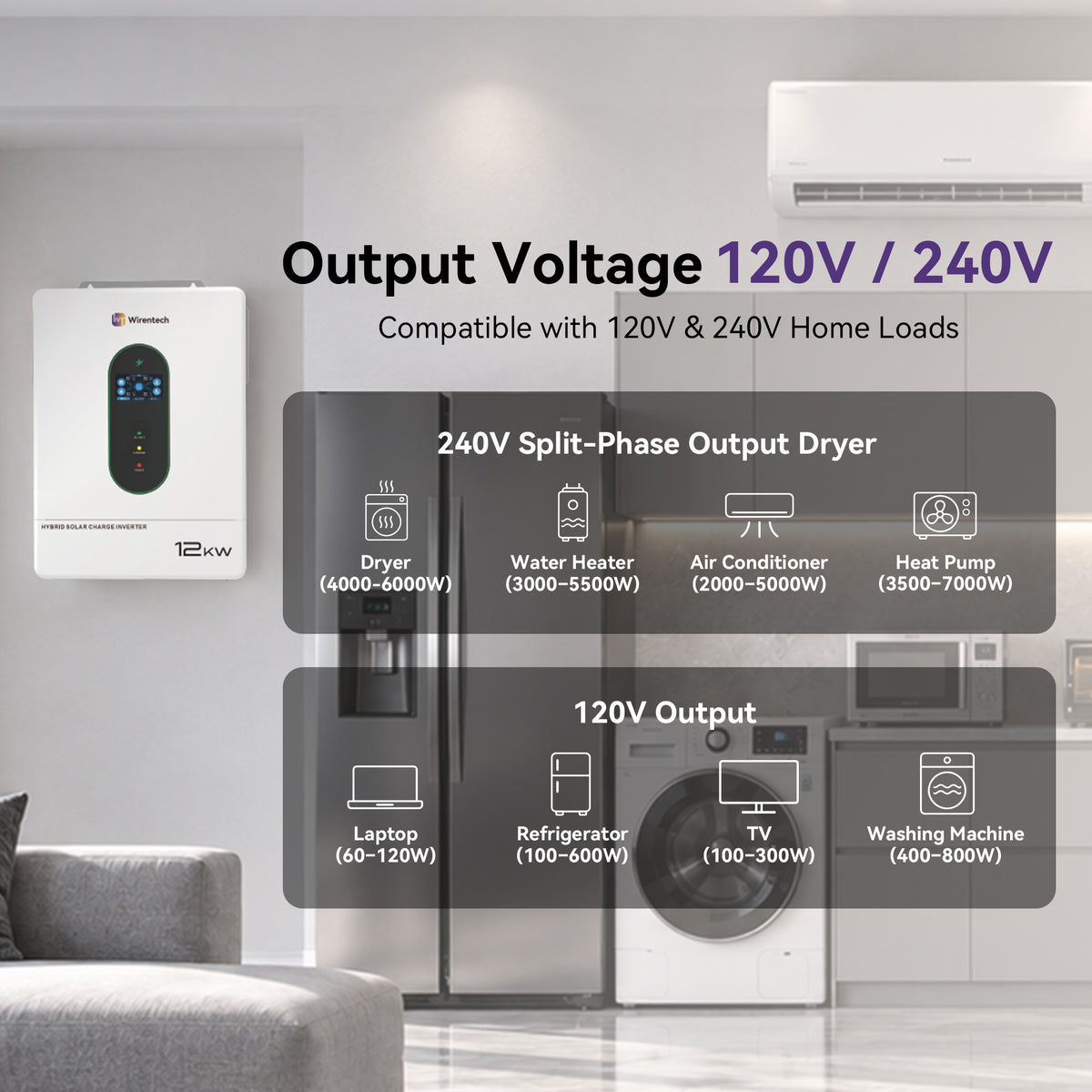
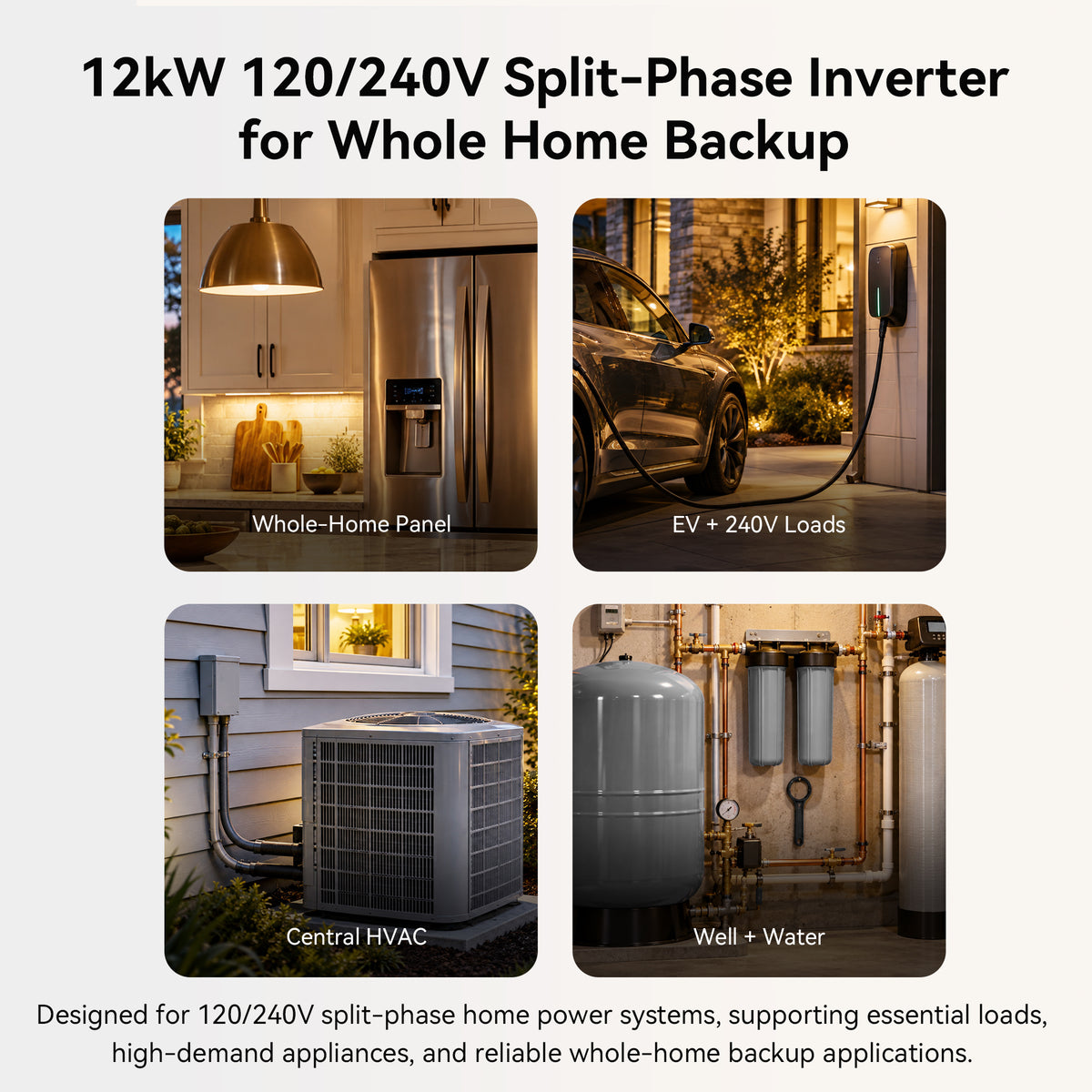
It depends on which appliances run at the same time. This inverter provides 12kW of continuous 120/240V split-phase output. A home with several large electric appliances may need load management or additional inverter capacity. Size the system around simultaneous demand and startup surges, not your monthly electricity bill alone.
Can it start my central AC, heat pump, or well pump?
It can power compatible motor-driven loads, but startup demand matters as much as running power. The manual lists 18kVA peak output. Check the appliance’s starting requirements, other loads already running, and the battery’s discharge capability. An AC tonnage or pump horsepower rating alone does not confirm compatibility.
What batteries do I need, and will one battery be enough?
The inverter supports lead-acid and compatible lithium batteries; its technical table specifies a 51.2V nominal battery voltage. Whether one battery is enough depends on its continuous and surge discharge limits, BMS compatibility, and your loads. A matching voltage or a large kWh rating alone does not guarantee full 12kW output.
How long will it power my home during an outage?
Backup time depends on usable battery energy and average power consumption, not the inverter’s 12kW rating. As a simple estimate, divide usable battery capacity in kWh by your average load in kW, then allow for conversion losses and the battery reserve setting. Running fewer high-power appliances extends backup time.
Can I install solar now and add batteries later?
Yes. The manual supports operation with solar and utility power without a battery. You can plan for compatible battery storage later. However, battery-free operation should not be treated as dependable outage backup. Include the future battery location, connections, and capacity in your installation plan.
How many solar panels can I connect?
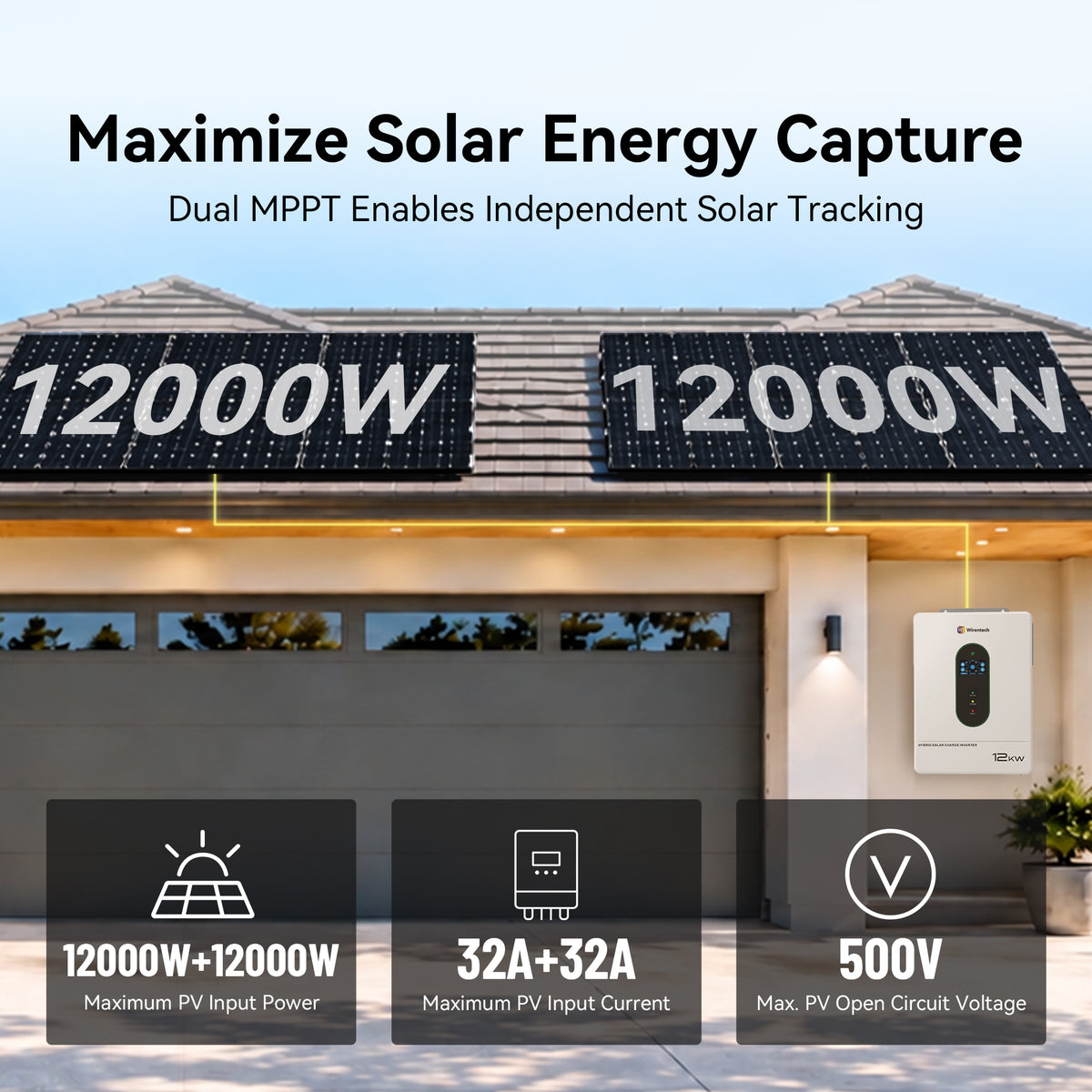
There is no single panel count: panel voltage, current, wattage, and the exact inverter version all matter. The inverter has two MPPT trackers with a 90–450V tracking range and a 500V maximum PV open-circuit voltage. The M250-500X/XP versions support up to 12,000W per tracker; other versions have lower limits. Have the array checked against all input limits before installation.
Can I use a generator when there is not enough sun?
Yes. A compatible generator can supply the AC input to power loads and charge the battery. This model uses the same AC input for utility or generator power; it does not have a separate dedicated generator input. Charging settings must leave enough generator capacity for the loads running at the same time.
Can I use solar first and keep the grid as backup?
Yes. The inverter supports solar self-consumption and configurable power priorities. With the appropriate settings, solar can supply your loads while battery storage and utility power support the system when needed. Battery reserve, charging preferences, and the selected operating mode determine when each source is used.
Can I start with one inverter and add more later?
Yes, if you choose a parallel-capable P or XP version. These versions support up to six units. Versions without the parallel suffix do not support this expansion. Confirm compatible models, communication requirements, and the installation layout before buying your first unit. Battery and wiring capacity must also suit the expanded system.
Can I install it in a garage that gets hot in summer?
A suitable garage installation must stay within the specified environmental limits and provide the required ventilation. The operating range is 14°F to 131°F (-10°C to 55°C), with power derating above 113°F (45°C). Do not expect full rated output at the upper end of that range. Follow the manual’s mounting and clearance requirements.