



FAQs
Can I use the full 7.2kW for 120V loads on one line?
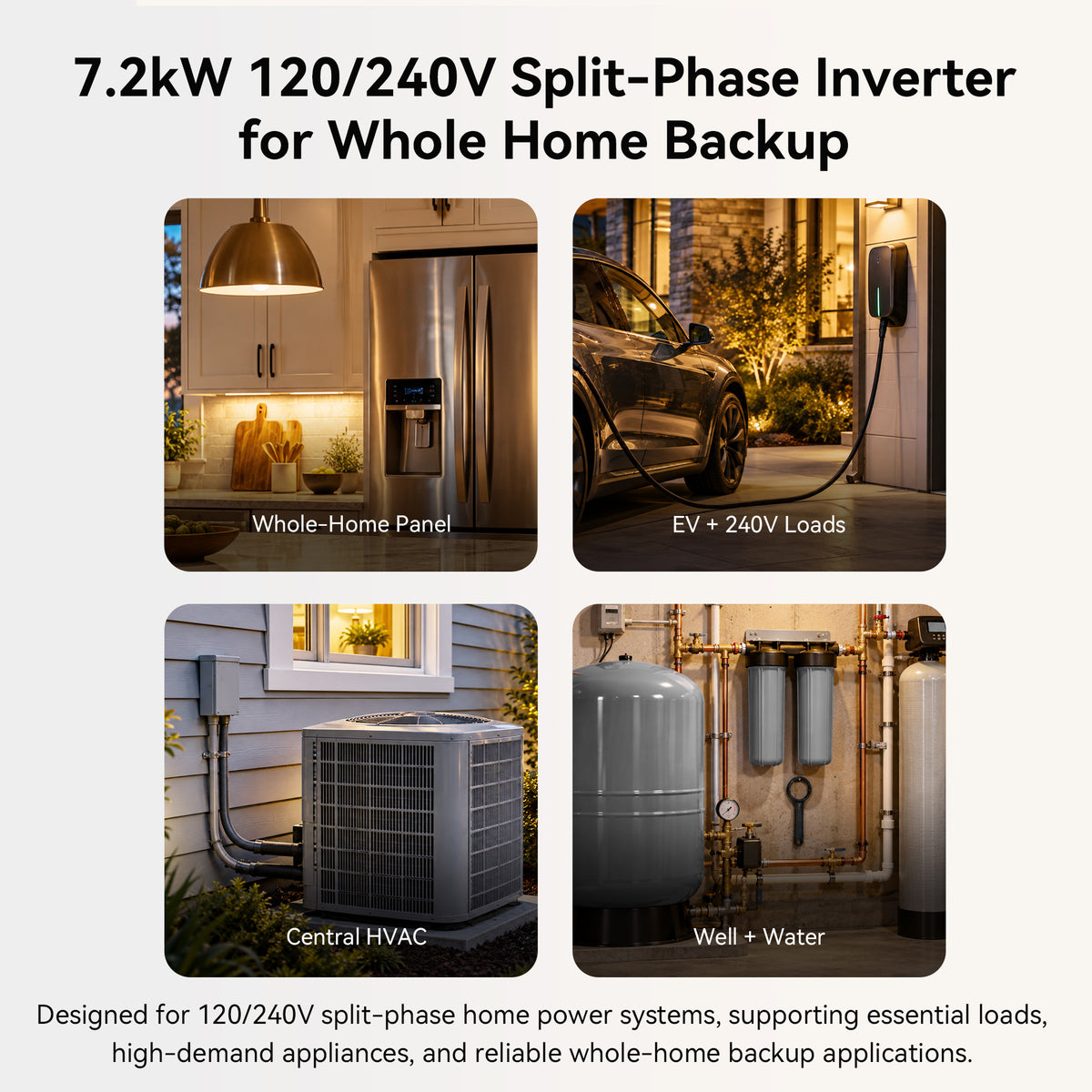
Do not size a single 120V line around the total 7.2kW rating. The manual rates this inverter at 7.2kW in split-phase mode and 6kW in single-phase mode. In a 120/240V installation, your installer needs to check the load on each line as well as the combined load. Single-phase mode is a different configuration; it does not mean one line in split-phase mode can supply 6kW.
Should I split a small solar array between both MPPT inputs?
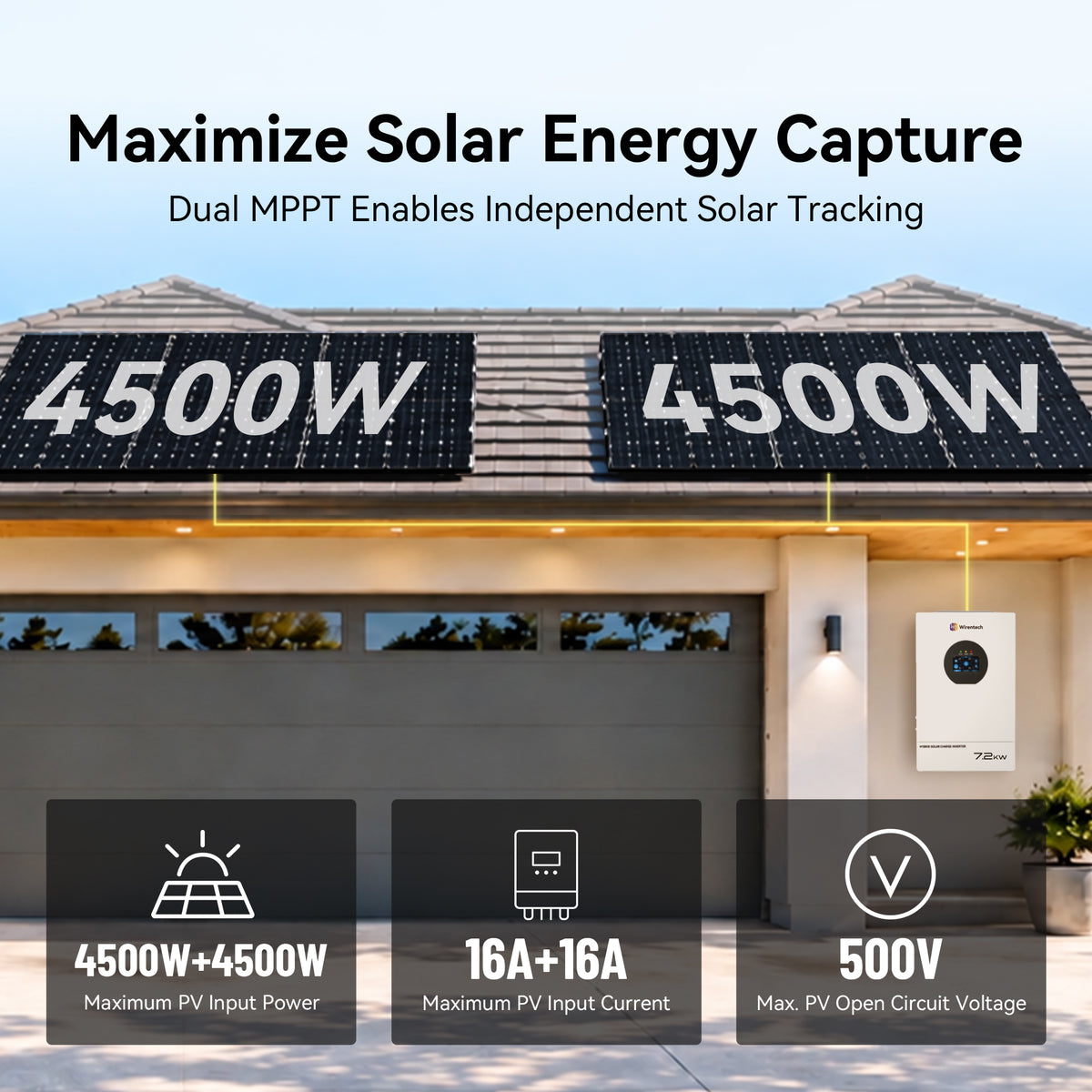
Only if each resulting string meets the input requirements. This model has a 120V PV startup voltage and a 90–450V MPPT range. Dividing a short string can leave too little voltage for reliable startup or operation. Have the string design checked against panel voltage across temperatures, the 500V maximum open-circuit voltage, and the 4,500W/16A limit per input.
Will power-saving mode keep a small router or security device running?
Power-saving mode can switch off the inverter output at very low loads. The manual says output turns off after a delay when the load per phase is absent or below 25W, and restarts when a load on either phase exceeds 50W. Leave this mode disabled when small devices need continuous power. The 25W figure is a load threshold, not a stated idle-consumption rating.
Is this inverter quiet enough to install near a bedroom?
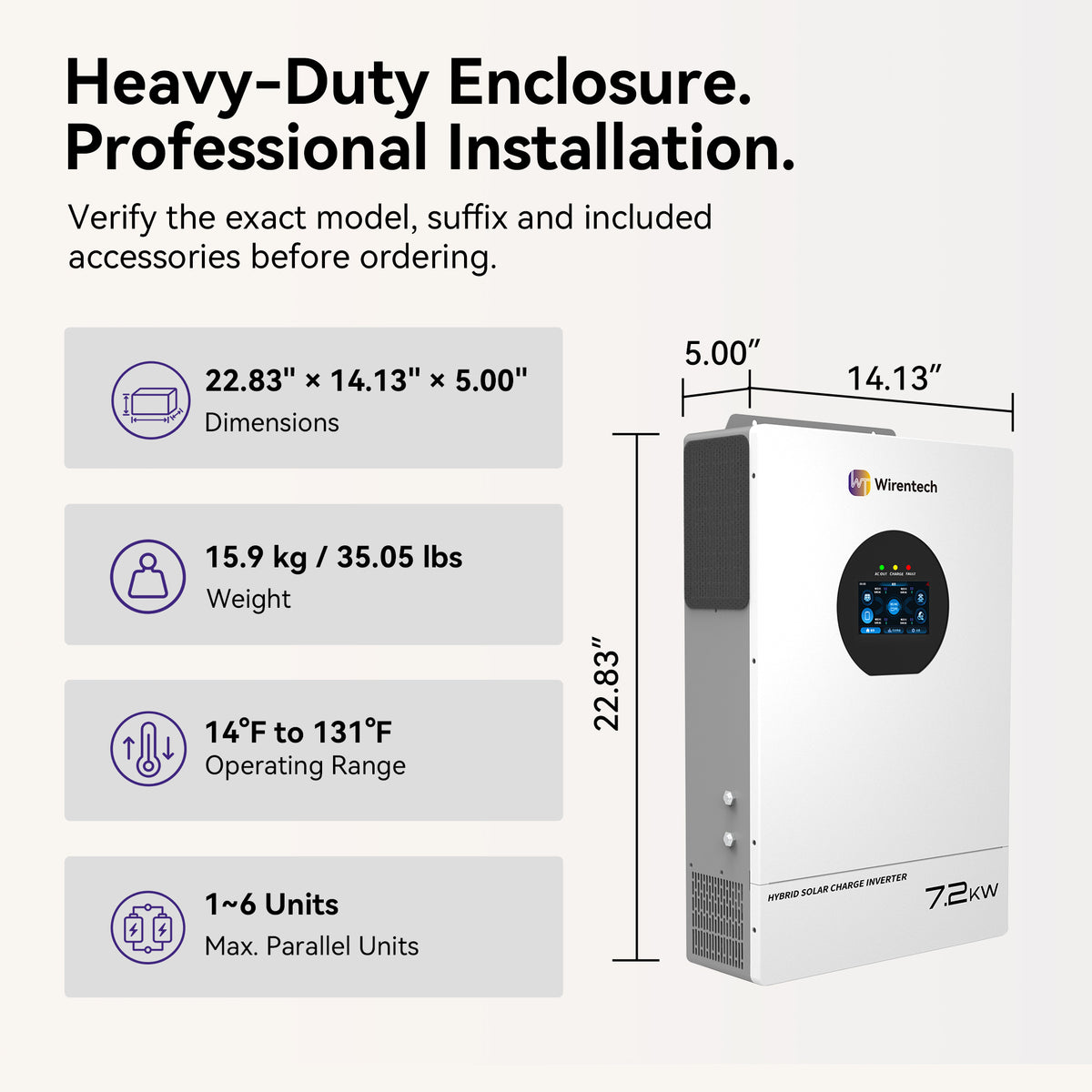
Plan for audible fan noise. The manual specifies variable-speed forced-air cooling and noise of ≤60dB, without giving a measurement distance or test condition. Choose a suitable ventilated location away from noise-sensitive rooms. The alarm-mute setting silences the buzzer; it does not silence the cooling fan.
Will solar and utility power charge the battery at the same time?
Yes, under the manual’s hybrid-charging conditions. Solar has priority and utility charging supplements it when solar is insufficient. The manual allows simultaneous charging while loads are supplied through mains bypass; in inverter-output operation, only PV charging operates. Limits are 120A for AC charging and 150A combined, measured on the battery side. Battery settings and available power may reduce the actual charging current.
Can it automatically start my backup generator?
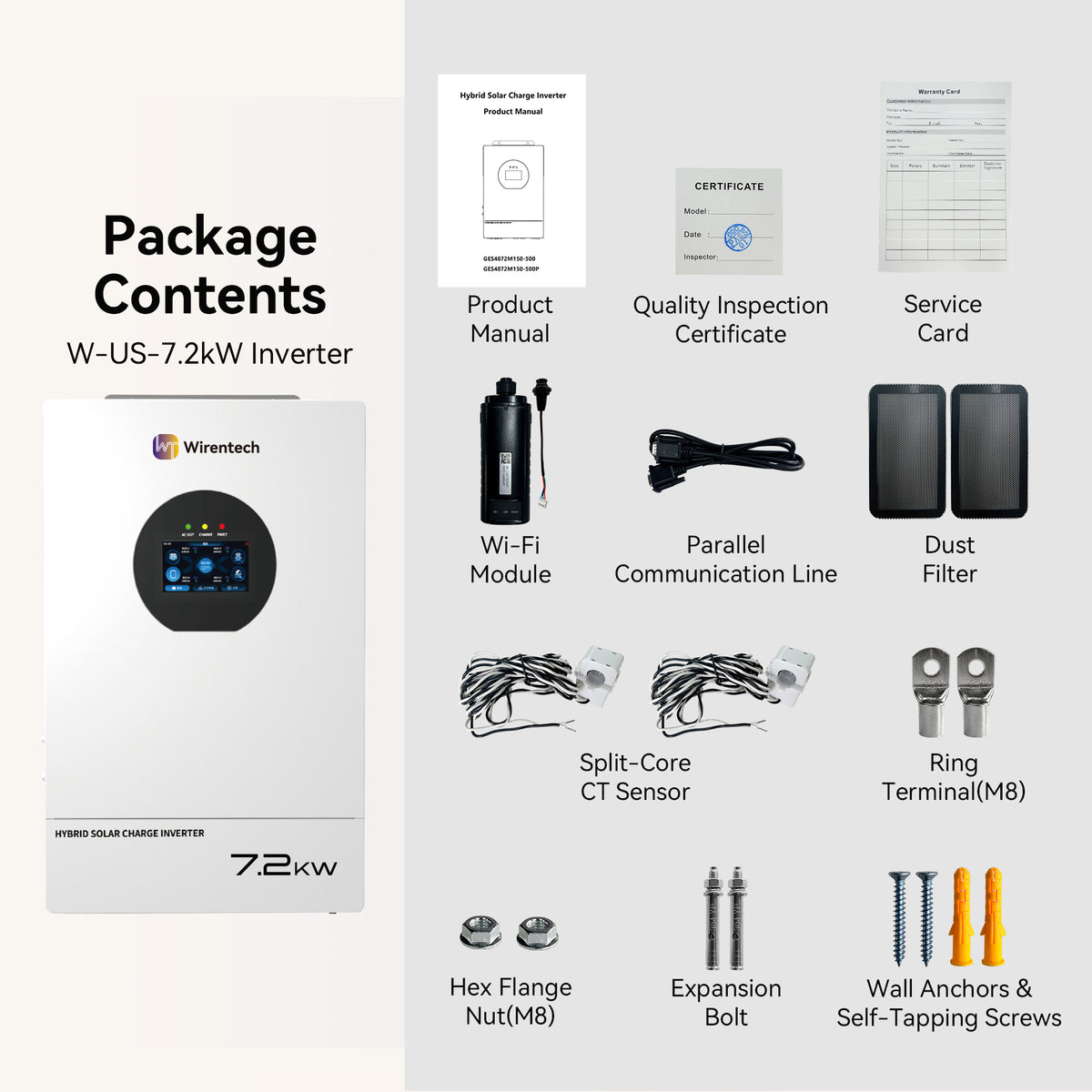
The manual provides a dry-contact signal for compatible generator start/stop control. Its relay changes state when the battery reaches the low-voltage disconnection point. Automatic starting requires a generator and controller that accept the appropriate signal; the inverter cannot add electric start to a manual-start generator. Have the installer confirm control compatibility and charging settings.
Will any RJ45 cable work for battery communication?
No. A matching connector does not guarantee matching wiring or communication. This inverter supports battery BMS communication through RS485/CAN. The approved battery model, communication protocol, cable pinout, and inverter settings must match. Confirm the correct cable and settings for your exact battery before installation; settings from another inverter brand may not apply.