
When building a home energy storage system, choosing the right inverter for a 51.2V rack battery is one of the most important decisions.
Many homeowners focus on battery capacity first and ask:
“How many kWh of battery storage do I need?”
But another important question is:
“What size inverter should match my battery system?”
The battery and inverter solve different problems.
Battery capacity determines:
How long your home can run on stored energy.
Inverter power determines:
How many appliances you can run at the same time.
A correct match between battery and inverter helps create a more reliable solar storage system and avoids unnecessary oversizing.
Start With Your Home Energy Storage Plan
Before selecting an inverter, understand your overall battery system requirements.
If you are still comparing different home energy storage solutions, read:
How to Choose the Right Home Energy Storage Battery
This guide explains:
- Battery sizing
- Rack battery vs wall-mounted battery
- Solar storage planning
- Backup power requirements
- Future expansion strategy
Understand the Relationship Between a 51.2V Battery and Solar Inverter
A common mistake is matching battery capacity directly with inverter power.
For example:
A 5kWh battery does not automatically need a 5kW inverter.
These are different measurements.
Battery Capacity (kWh)
Battery capacity tells you how much energy is stored.
Example:
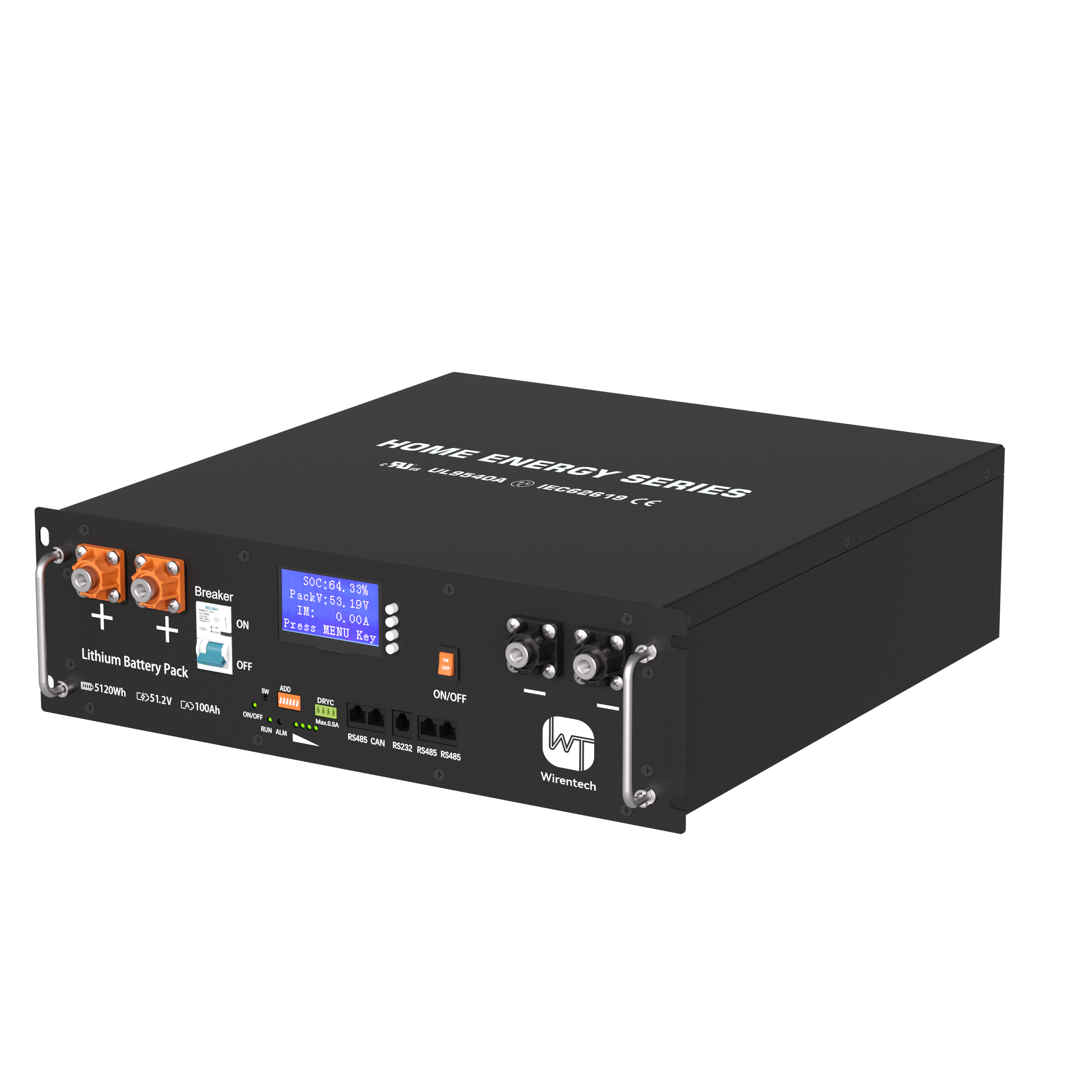
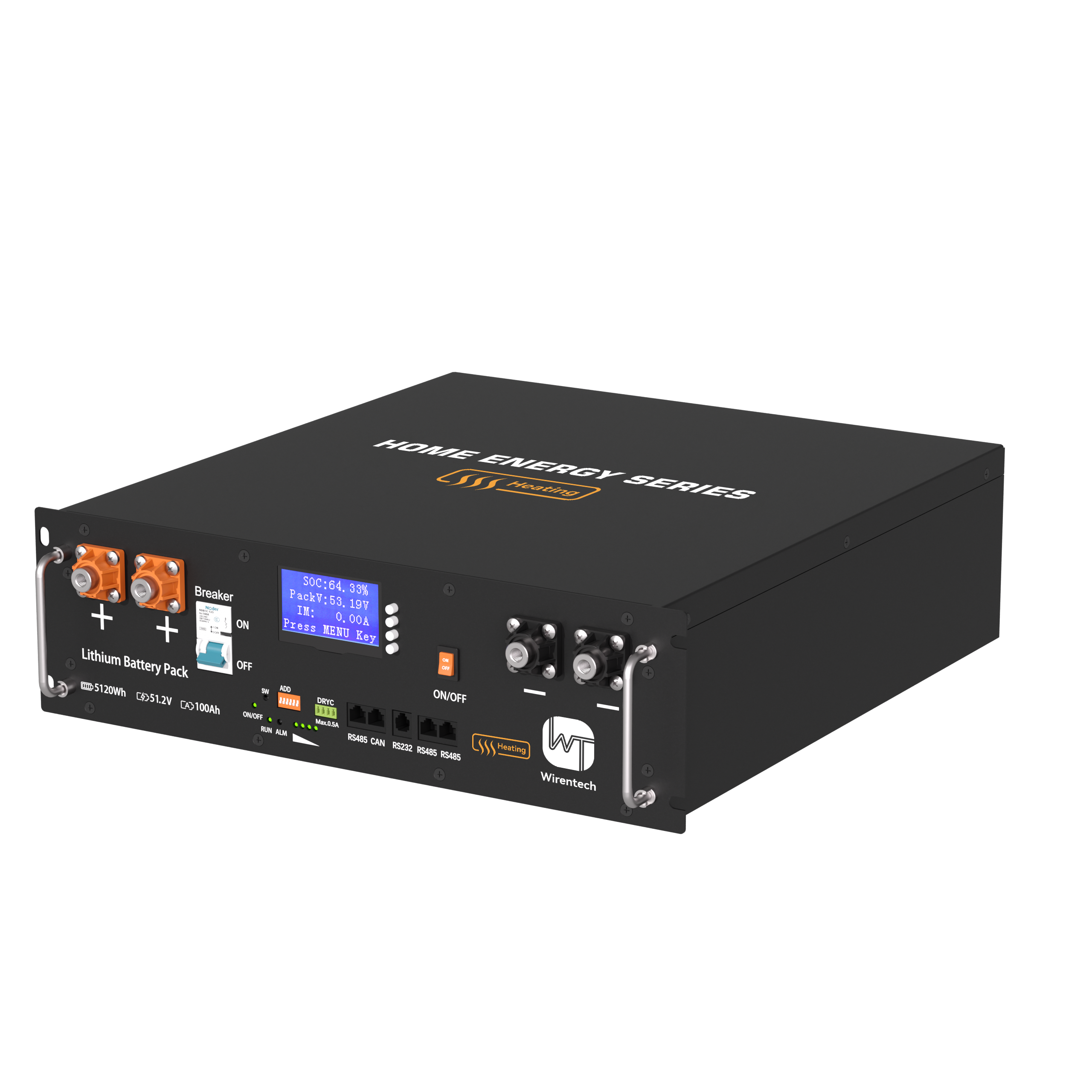
A Wirentech WT5100 51.2V 100Ah rack battery provides approximately:
- 51.2V system voltage
- 100Ah capacity
- 5.12kWh energy storage
If you need longer backup time, you usually increase battery capacity.
Inverter Power (kW)
Inverter power determines how much electricity your system can provide at one time.
For example:
Running:
- Refrigerator
- Lights
- Internet equipment
requires much less inverter power than:
- Air conditioning
- Water pumps
- Multiple household appliances
The inverter should match your peak power demand.
Step 1: Confirm 51.2V Battery Compatibility
The first step is ensuring the inverter supports your battery system.
A 51.2V rack battery belongs to the common 48V-class lithium battery system.
Before choosing an inverter, check:
- Battery voltage compatibility
- LiFePO4 battery support
- Charging parameters
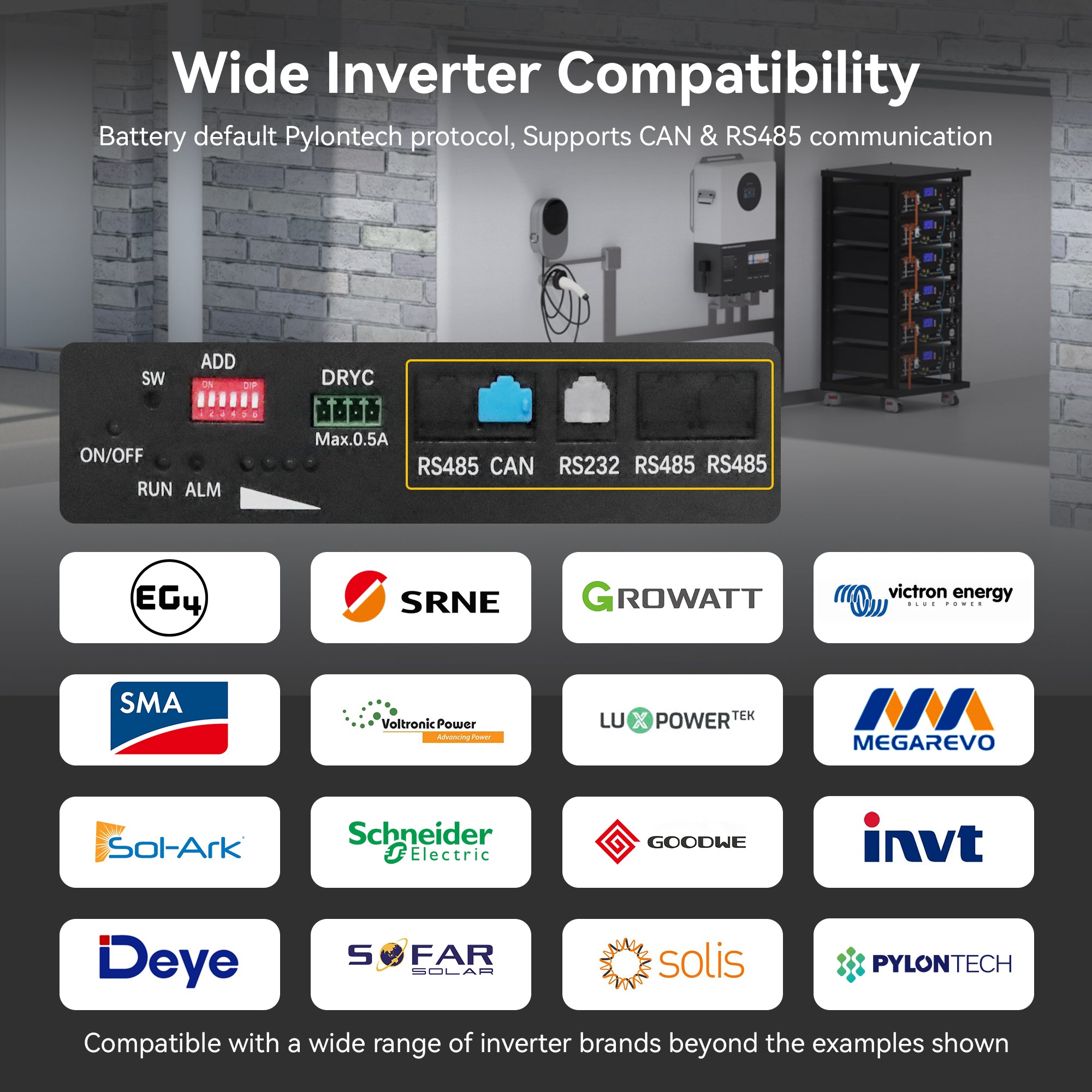
- Communication compatibility
A compatible battery and inverter combination helps maintain stable charging and discharging.
Step 2: Calculate Your Required Inverter Power
The inverter size should be based on the appliances you want to run.
A simple calculation:
Total running power
Startup surge requirements
=
Required inverter output
For example:
A basic backup system may only support:
- Refrigerator
- Lighting
- WiFi
- Security devices
A larger home backup system may need:
- Kitchen appliances
- Pumps
- Air conditioning
- Multiple circuits
The inverter should be selected according to the highest expected power demand.
Step 3: Match Battery Capacity With Inverter Size
Battery quantity and inverter power should be planned together.
A practical matching guide:
| Battery Configuration | Storage Capacity | Recommended Inverter Range | Best Application |
|---|---|---|---|
| 1 × 51.2V 100Ah Rack Battery | 5.12kWh | 3.6kW–6.5kW | Essential backup |
| 2 × 51.2V 100Ah Rack Battery | 10.24kWh | 6.5kW–7.2kW | Medium home backup |
| 3–4 × Rack Battery | 15–20kWh | 10kW | Larger residential storage |
| 4+ × Rack Battery | 20kWh+ | 10kW–12kW | Whole-home backup |
The goal is balance.
A battery bank that is too large for the inverter may limit available output.
An oversized inverter paired with a small battery may increase cost without improving backup duration.
How to Choose the Right Inverter Size for a 51.2V Rack Battery
3.6kW Hybrid Inverter
Best fit:
- One smaller battery system
- Essential backup loads
- Small residential solar storage
Recommended for:
- Refrigerator
- Lights
- Internet
- Basic electronics
6.5kW Hybrid Inverter
Best fit:
- Small to medium residential systems
- Larger household loads
- More backup circuits
Recommended for users who want more flexibility than basic backup.
7.2kW Hybrid Inverter
Best fit:
- Larger residential battery systems
- Higher daily energy usage
- More solar input
Suitable for homeowners who need additional output capacity.
10kW Hybrid Inverter
Best fit:
- Multiple battery systems
- Larger solar storage projects
- Higher household power demand
Recommended for:
- Larger homes
- Longer backup requirements
- More connected loads
12kW Hybrid Inverter
Best fit:
- Large residential energy storage
- Whole-home backup
- Higher power applications
When paired with sufficient battery capacity, a 12kW inverter can support larger home energy systems.
When Should You Choose a Hybrid Inverter With Bypass?
A standard hybrid inverter can manage:
- Solar input
- Battery charging
- Grid connection
- Backup power
However, some homeowners need additional backup capability.
Choose a hybrid inverter with bypass when you need:
- Whole-home backup
- Better power transition management
- Critical load protection
- Frequent outage support
The difference is not only inverter power.
It is the backup experience.
Example 51.2V Rack Battery and Inverter Configurations
Small Backup System
System:
- 1 × 51.2V 100Ah rack battery
- 5.12kWh storage
Recommended inverter:
- 3.6kW–6.5kW
Best for:
- Essential loads
- Short backup periods
Medium Home Energy Storage
System:
- 2 × 51.2V rack batteries
- 10.24kWh storage
Recommended inverter:
- 6.5kW–7.2kW
Best for:
- Daily solar usage
- Medium backup needs
Large Residential Backup
System:
- Multiple rack batteries
- 15–20kWh+ storage
Recommended inverter:
- 10kW–12kW
Best for:
- Larger homes
- Whole-home backup
- Higher electricity demand
Common Mistakes When Matching a 51.2V Rack Battery and Solar Inverter
Choosing an Inverter Only by Battery Capacity
A larger battery does not automatically require a larger inverter.
The inverter should match your actual loads.
Choosing Battery Capacity Only by Inverter Size
A powerful inverter cannot increase battery runtime.
If the battery is too small, backup time will still be limited.
Ignoring Future Expansion
Many homeowners add:
- More solar panels
- More appliances
- Additional batteries
Choose a system that can support future growth.
51.2V Rack Battery and Solar Inverter Matching Checklist
| Check Item | Why It Matters |
|---|---|
| Battery Voltage | Ensures electrical compatibility |
| Inverter Output | Determines supported loads |
| Battery Capacity | Determines backup duration |
| Charging Capability | Affects system performance |
| Communication | Improves system coordination |
| Expansion Support | Allows future upgrades |
Final Decision: How to Match a 51.2V Rack Battery With a Solar Inverter?
The simplest matching rule:
5kWh-class battery system
→ 3.6kW–6.5kW inverter
10kWh-class battery system
→ 6.5kW–7.2kW inverter
15–20kWh battery system
→ 10kW inverter
20kWh+ whole-home backup system
→ 10kW–12kW inverter, with bypass option when required
The best inverter is not the largest one.
It is the inverter that matches:
- Your battery capacity
- Your household loads
- Your backup expectations
- Your future expansion plans
Frequently Asked Questions
Can any solar inverter work with a 51.2V rack battery?
No. The inverter must support the correct battery voltage, lithium battery charging requirements, and communication compatibility.
What size inverter should I use with one 51.2V 100Ah battery?
A 3.6kW–6.5kW hybrid inverter is usually suitable depending on your household loads and backup goals.
Can I use a 10kW inverter with a 5.12kWh battery?
It may work in some system designs, but the battery capacity may not provide enough runtime for high loads.
How many 51.2V batteries do I need for a 10kW inverter?
A larger inverter is usually better matched with multiple battery modules because higher loads require more stored energy.
When should I choose a bypass inverter?
Choose a bypass inverter when you need stronger whole-home backup capability and smoother switching between grid and battery power.
Should I select the inverter before the battery?
Battery and inverter should be planned together because both affect system performance and future expansion.
Product Selection Support
Choosing the right 51.2V rack battery and solar inverter combination depends on:
- Battery quantity
- Household electricity usage
- Backup requirements
- Solar system size
- Future expansion plans
Wirentech can help you select the right LiFePO4 rack battery and hybrid inverter configuration for your home energy storage system.
![[Pre-Order] IP65 Wirentech WP51314 51.2V 314Ah 16kWh Powerwall LiFePO4 Battery](http://wirentechshop.com/cdn/shop/files/WP51314.png?v=1779699725&width=1280)


![[Pre-Order] Wirentech 12kW Hybrid Solar Inverter with Bypass for Home Energy Storage](http://wirentechshop.com/cdn/shop/files/12bp_bdcf00b1-989c-4581-bd54-0974ab610f28.png?v=1788318623&width=2000)
![[Pre-Order] Wirentech 12kW Hybrid Solar Inverter with Bypass for Home Energy Storage](http://wirentechshop.com/cdn/shop/files/G01-purchase-overview-2000x2000_239b36c9-5789-4dde-ac70-4fa1f1710694.jpg?v=1788855790&width=2000)
![[Pre-Order] Wirentech 12kW Hybrid Solar Inverter with Bypass for Home Energy Storage](http://wirentechshop.com/cdn/shop/files/G02-application-fit-2000x2000_ed7587c3-7052-442c-8988-58b2b01e63c2.jpg?v=1788855790&width=2000)
![[Pre-Order] Wirentech 12kW Hybrid Solar Inverter with Bypass for Home Energy Storage](http://wirentechshop.com/cdn/shop/files/G03-solar-input-2000x2000_767280a4-e107-4dfe-9ecf-ae5577ec7c7c.jpg?v=1788855790&width=2000)


Share:
5kWh vs 16kWh Home Battery: Which Size Is Right for Your Home?
How to Choose a Server Rack Battery for Solar