
The right server rack battery for solar must match your required backup energy, peak load, inverter voltage window, charging limits, communication protocol, installation space, and expansion plan. A 51.2V 100Ah label is only a starting point. Before buying, compare the complete battery and inverter documentation as one system.
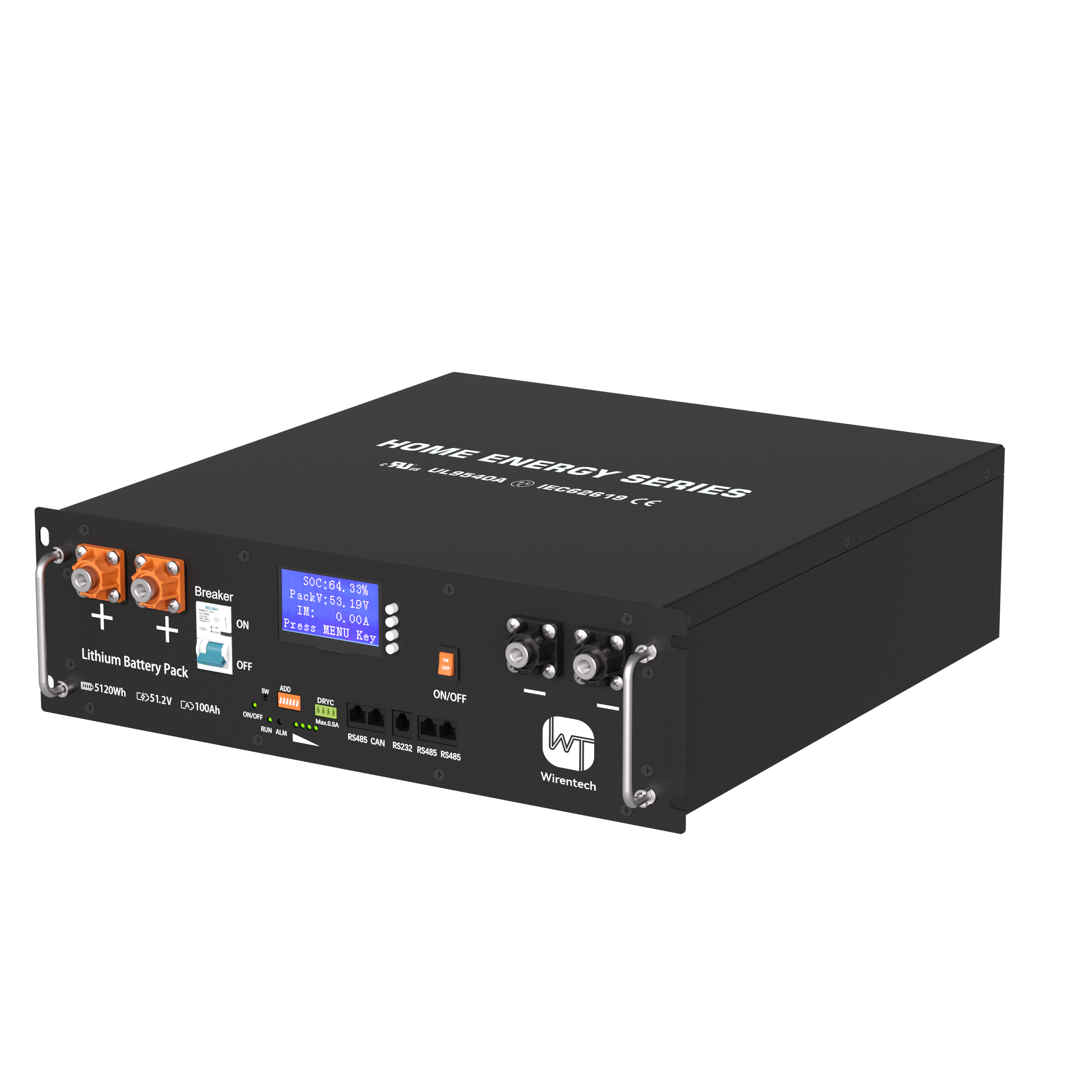
This guide explains the decisions that matter for a residential solar-storage or backup project and uses the Wirentech WT5100 UL as a documented 5.12kWh rack-battery example.
Start With These Seven Checks
Do not begin with the number of batteries. Begin with the loads you need to support, how long they must run, and the equipment that will charge and control the battery bank.
| What to check | What to record | Why it matters |
|---|---|---|
| Backup loads | Running watts, startup surge, and daily watt-hours | Power and energy solve different parts of the backup problem. |
| Required runtime | Hours of backup and the reserve you want to keep | This determines the battery-bank energy target. |
| Inverter | Exact model, battery voltage window, charge current, and firmware | A general 48V label does not establish compatibility. |
| Communication | CAN or RS485 protocol, port, pinout, cable, and battery profile | Matching connector names do not prove that two devices communicate. |
| Battery output | Continuous current, short-duration limits, and module quantity | The bank must support the inverter's expected DC demand. |
| Installation | Rack size, clearances, cable routing, protection, temperature, and access | The battery must fit a serviceable and manual-compliant installation. |
| Documentation | Exact manual, certificate, test report, model number, and revision | Badges and another model's documents are not sufficient evidence. |
Record these inputs before comparing prices. If the inverter model, load audit, or installation plan is still unknown, the battery selection is not ready to finalize. Use the companion LiFePO4 server rack battery buying checklist to turn the seven checks into a purchase file.
Size Energy and Power Separately
Battery energy is measured in kilowatt-hours. It determines how long a load can run. Battery and inverter power are measured in kilowatts. They determine how much equipment can operate at the same time.
The basic nameplate-energy calculation is:
Nominal energy (kWh) = nominal voltage (V) × capacity (Ah) ÷ 1,000
A 51.2V 100Ah battery therefore stores 5.12kWh of nameplate energy. For a transparent first estimate:
Estimated runtime (hours) = battery energy × usable fraction × inverter efficiency ÷ average load
The usable fraction and conversion efficiency are planning assumptions, not fixed properties of every system. Use conservative values until the exact battery and inverter documentation provides better inputs.
| WT5100 modules | Nameplate energy | Planning use | Still must be verified |
|---|---|---|---|
| 1 | 5.12kWh | Starting point for selected essential loads | Usable reserve, load profile, inverter draw, and required runtime |
| 2 | 10.24kWh | Longer runtime or a larger essential-load plan | Parallel configuration, protection, cabinet, cables, and inverter limits |
| 4 | 20.48kWh | Larger backup target or more operating reserve | Complete bank design, current sharing, service access, and project requirements |
The table shows nameplate energy only. It is not a runtime promise or an instruction to connect a specific number of batteries.
Use the existing guide on how many server rack batteries a home-backup system may need for the full bank-sizing process. If you are evaluating one module first, review whether a 5.12kWh rack battery is enough for your selected loads.
Verify Voltage and Inverter Fit
Many LiFePO4 batteries with a 51.2V nominal rating are sold for 48V-class energy-storage systems. That naming convention does not mean every 48V inverter supports every 51.2V battery.
Nominal voltage is only one value. Compare the battery's complete operating and charging limits with the exact inverter manual.
| Compatibility item | Battery document | Inverter document | Pass condition |
|---|---|---|---|
| Battery chemistry | LiFePO4 chemistry and required charge behavior | Supported battery types and profiles | The inverter explicitly supports the required battery chemistry or approved manual settings. |
| Operating voltage | Minimum and maximum operating limits | Permitted DC battery-voltage window | The full intended operating range is supported. |
| Charging | Maximum voltage and recommended current | Charge-voltage and current controls | The inverter can remain within the battery's documented limits. |
| Discharge demand | Continuous and short-duration current limits | Expected DC draw at continuous and surge output | The bank can support the expected demand with the required reserve. |
| Communication | Port, protocol, cable, address, and battery settings | Compatible battery profile, port, protocol, and firmware | Both manufacturers' requirements agree for the exact models. |
Read 48V vs 51.2V LiFePO4 Battery: What Changes? before treating the front-panel voltage label as a compatibility decision.
Check Communication Before Buying
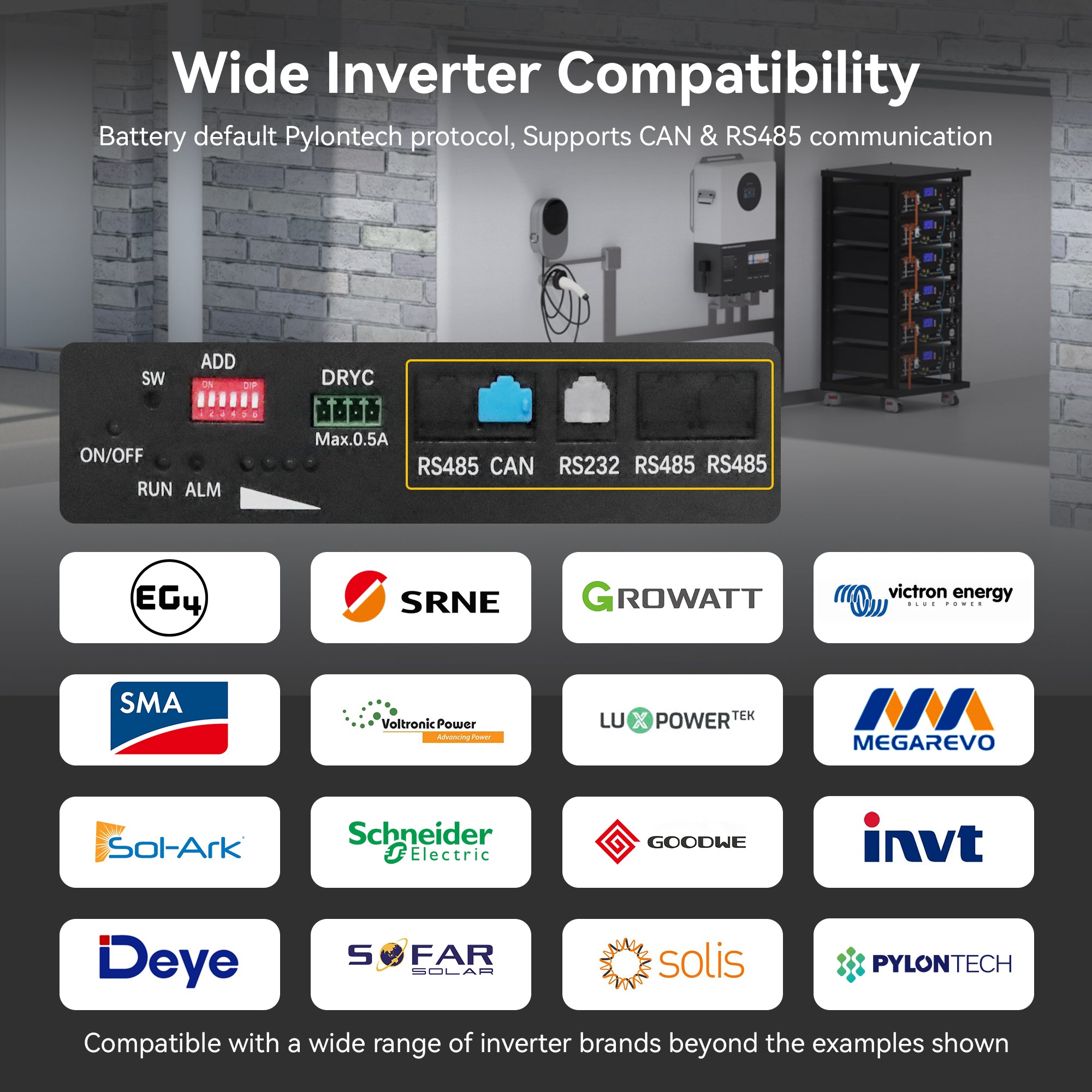
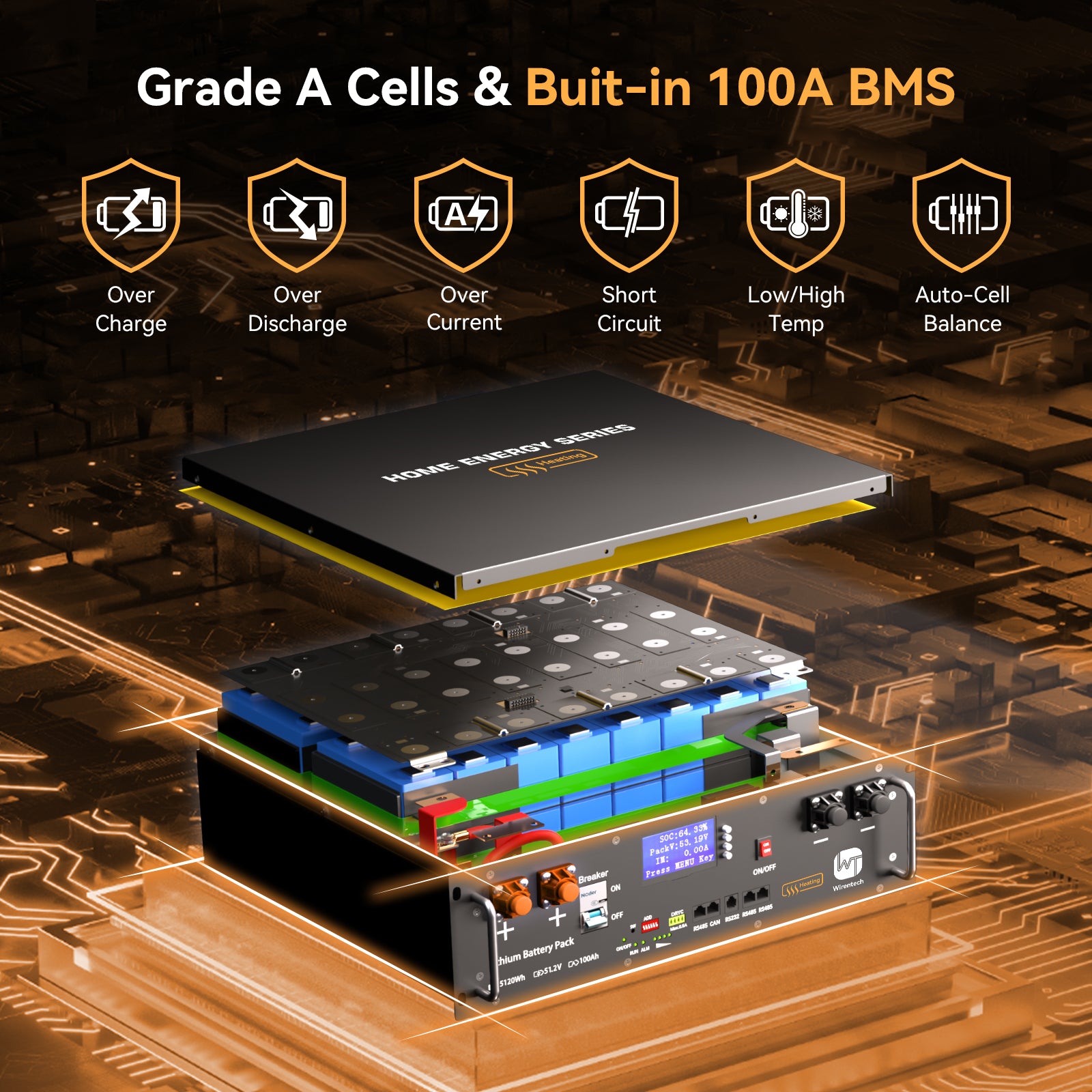
Closed-loop battery communication allows the battery management system and inverter to exchange operating information. A battery may provide CAN and RS485 ports, but the inverter must still support the correct protocol, cable pinout, battery profile, and firmware.
Before ordering, confirm:
- the exact inverter model and firmware version;
- the communication method required by the inverter;
- the protocol supported by the battery;
- the correct communication port and cable pinout;
- whether DIP-switch or address settings are required;
- whether the system uses one master battery and additional slave batteries;
- which inverter battery profile must be selected.
A voltage-compatible battery can still fail to communicate correctly. Use the complete 51.2V rack battery and solar inverter matching guide before committing to a system pair.
Review Safety Documents
Safety and compliance documents must match the exact battery model and variant. Do not rely only on a product-page badge, a certificate for a similar enclosure, or a test report that does not identify the product being purchased.
| Document | What to verify | What it does not prove by itself |
|---|---|---|
| User manual | Exact model, revision, voltage, current, temperature, communication, installation, and operation rules | Certification, local approval, or compatibility with an unnamed inverter |
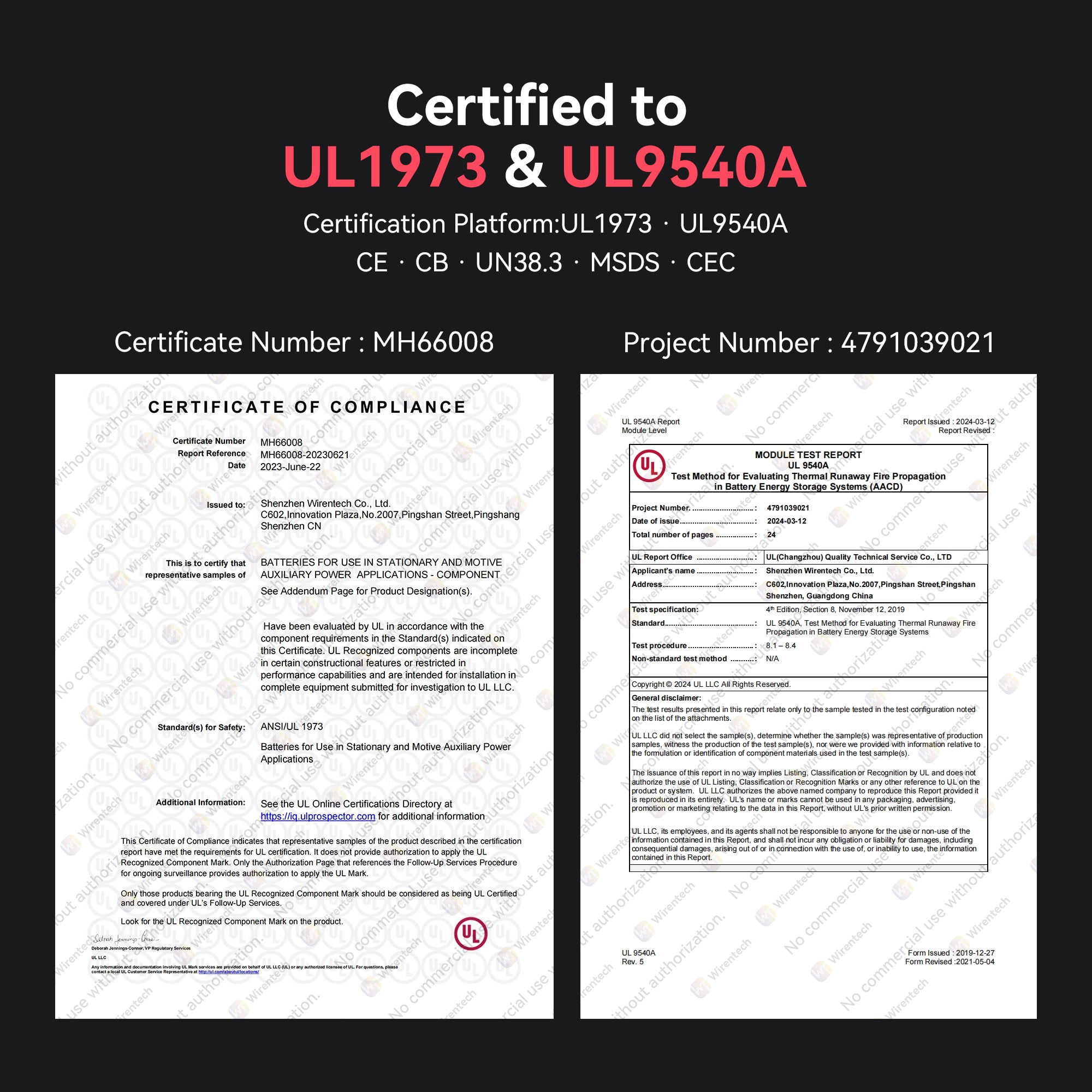
| UL 1973 document | Model identifier, document type, standard edition, holder, and scope | Certification of the complete installed energy-storage system |
| UL 9540A report | Test method, sample or system level, model, configuration, and report scope | Automatic approval of every installation or jurisdiction |
| Inverter compatibility information | Exact inverter model, protocol, firmware, cable, and settings | Compatibility with every inverter from the same brand |
The WT5100 UL product page provides links to the current user manual, a UL 1973 document, and a UL 9540A test report. Review the exact scope before using those documents for an installer, permitting office, insurer, or project requirement. The planned WT5100 UL document guide organizes these exact-model files in one review path.
For more detail, read what a UL-evaluated server rack battery document means and the separate explanation of UL 1973 versus UL 9540A.
Plan the Rack and Expansion
Rack batteries are useful when a system must start small and expand in modules. Expansion still requires more than placing additional batteries on a shelf.
A complete rack plan should address:
- rack or cabinet dimensions and load capacity;
- battery support, restraint, and service clearance;
- ventilation and the temperature range required by the manual;
- positive and negative conductor routing;
- overcurrent protection and isolation;
- busbar or cable architecture;
- communication daisy-chain order and battery addressing;
- equal current paths where required by the system design;
- space for future modules without blocking maintenance access.
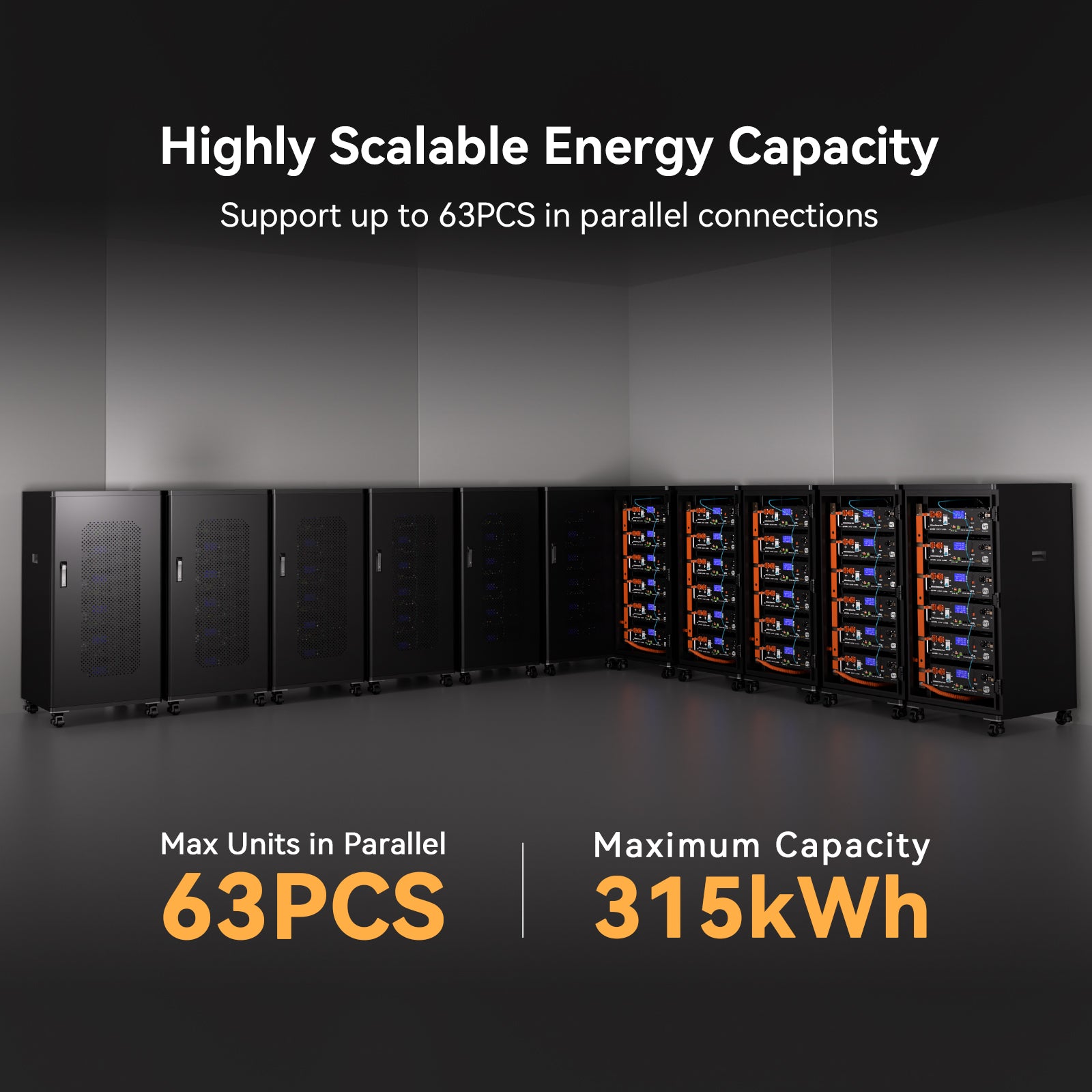
The WT5100 manual states that the model can scale to a maximum of 63 units in parallel. That is a product limit, not a recommendation that every residential system should approach that quantity. The inverter, protection system, cabinet, conductors, communication design, installation requirements, and project documentation may impose lower practical limits.
If you are still choosing the physical format, compare rack and floor-standing batteries before designing the enclosure. For expansion work, use the planned guide to plan parallel server rack batteries.
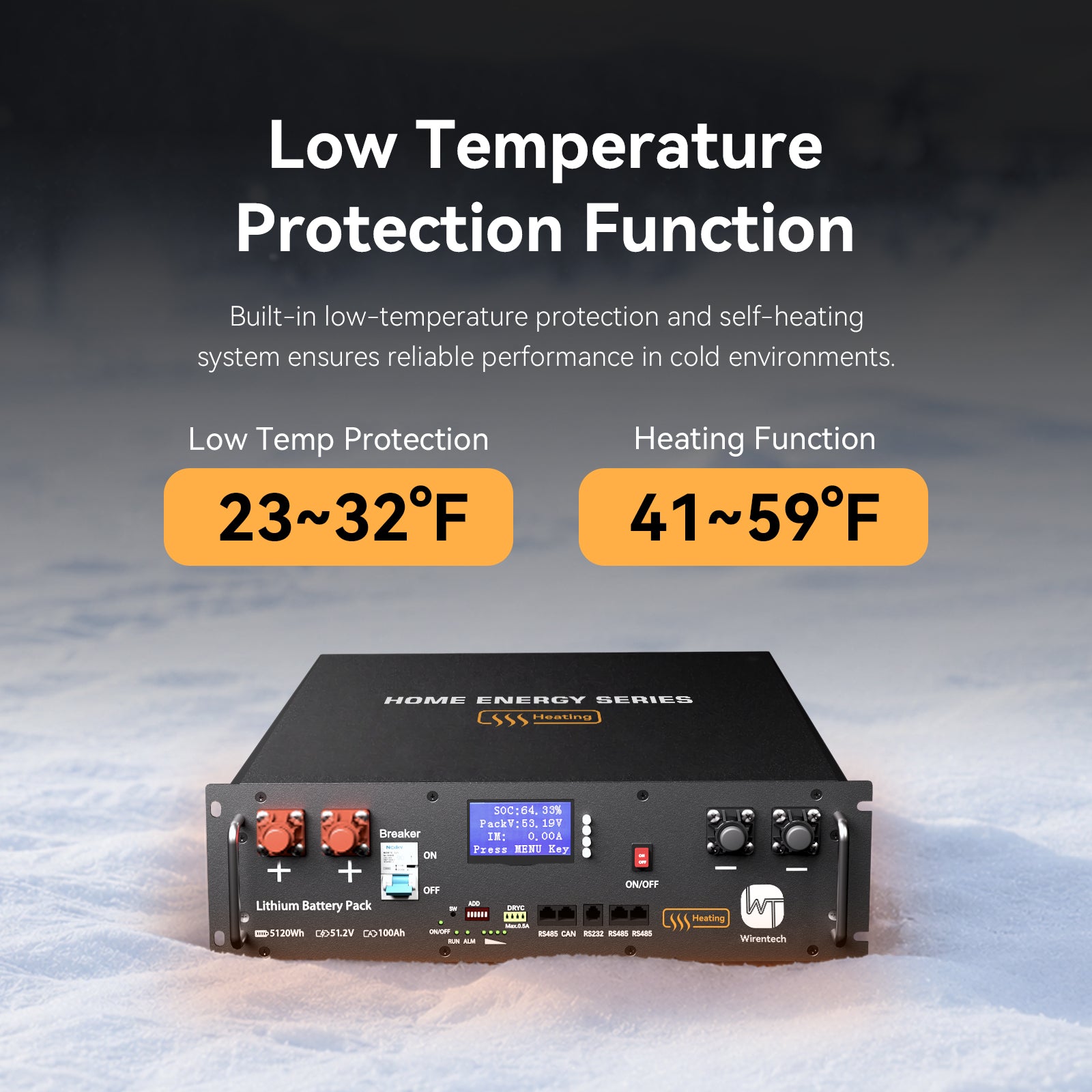
Choose UL or Self-Heating
The WT5100 UL version and WT5100 self-heating version are separate products. Do not combine their feature or certification claims.
The UL version should be the primary Wirentech comparison when a buyer needs the documentation currently provided for that exact product. The self-heating version belongs in a separate cold-weather decision path for installations where charging temperature is a material concern.
Do not assume that the self-heating version carries the UL-version documents. Read Do You Need a Self-Heating LiFePO4 Battery? only when the installation environment requires that separate feature.
Compare the WT5100 UL
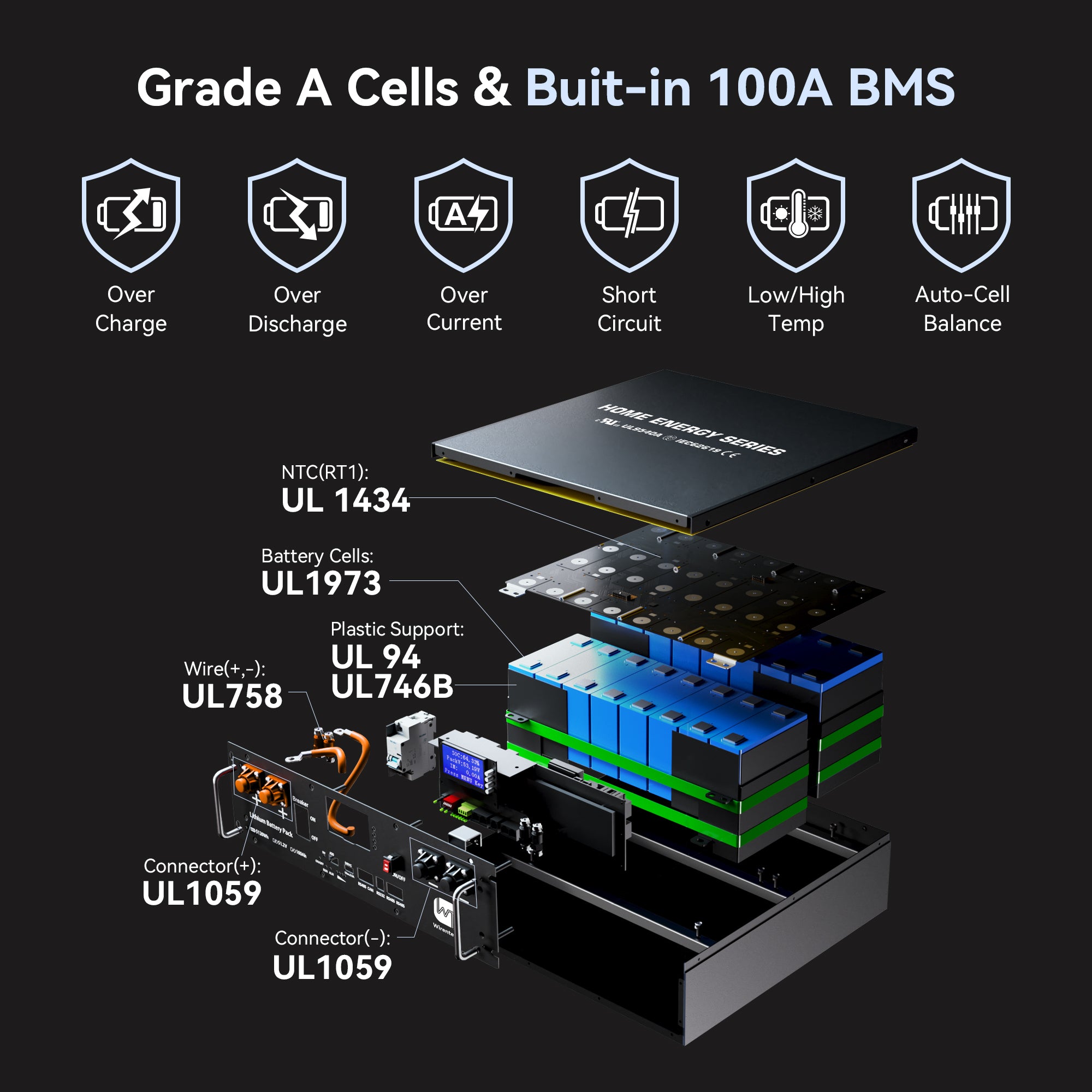
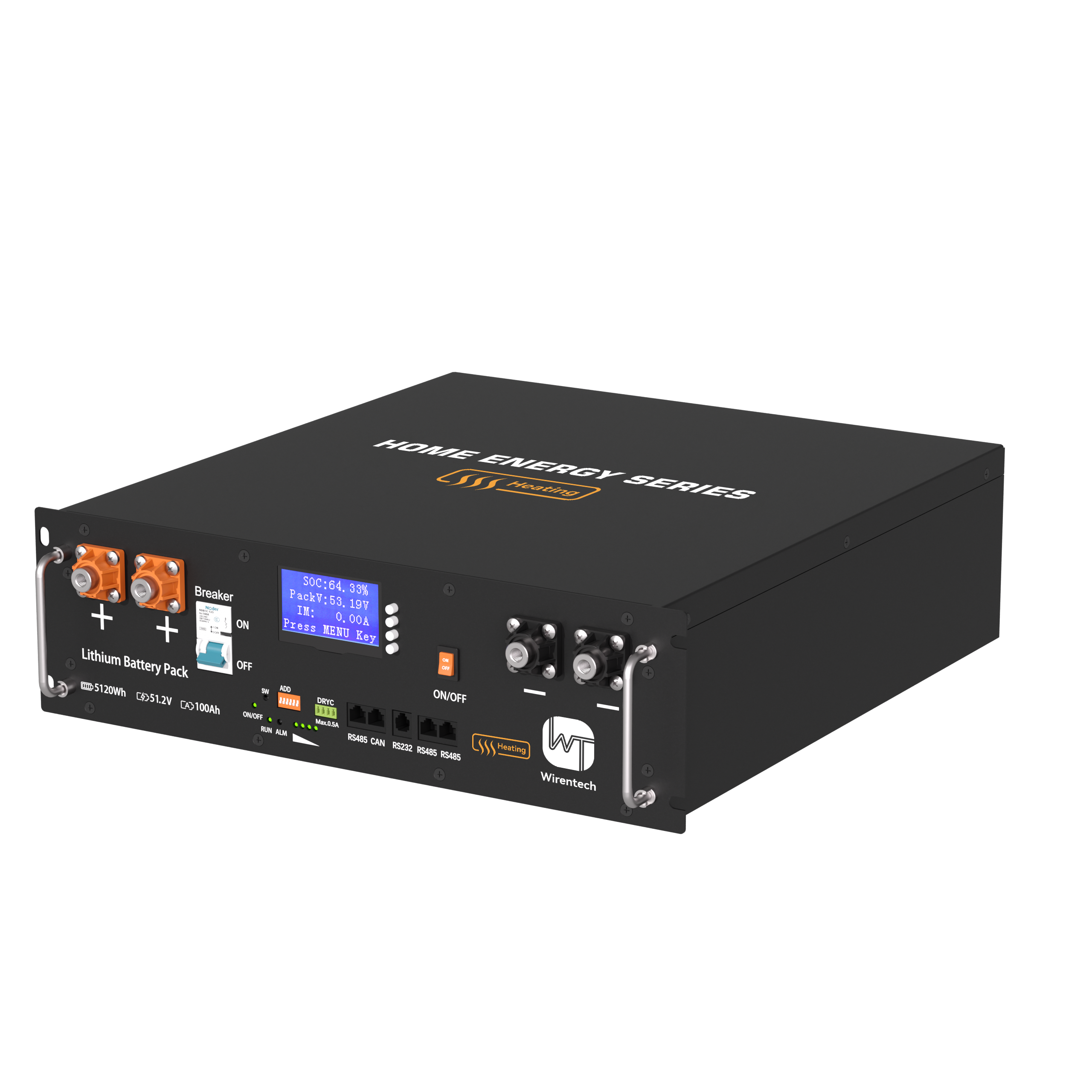
The WT5100 UL is one documented option for a modular 51.2V solar-storage or backup system. Its current manual and product page list the following specifications:
| Specification | WT5100 UL | Why a buyer should check it |
|---|---|---|
| Nominal voltage and capacity | 51.2V, 100Ah | Defines the nominal battery architecture and supports the energy calculation. |
| Nameplate energy | 5.12kWh | Provides the starting point for runtime and module-count planning. |
| Operating voltage | 40V-58.4V | Must fit within the exact inverter's permitted battery-voltage window. |
| Maximum charge voltage | 58.4V, adjustable | The charging equipment must stay within the documented limit. |
| Recommended charge current | 50A at 77°F | Helps configure charging and estimate charging demand under the stated condition. |
| Continuous discharge current | 100A at 77°F | Must be evaluated against the inverter's expected DC demand. |
| Inverter communication | CAN and RS485 | The exact protocol, cable, settings, and firmware still require verification. |
| Parallel expansion | Maximum 63 units | Actual system size remains subject to the complete design and project limits. |
| Enclosure protection rating | IP22 | The installation location must satisfy the manual's environmental requirements. |
| Warranty | 10 years | Review the current warranty terms, eligibility, exclusions, proof requirements, and support process before purchase. |
Specifications and the current 10-year warranty presentation were rechecked against the WT5100 manual, current product page, and current commercial confirmation on September 7, 2026. Recheck the latest documents and warranty terms before publication, purchase, or installation.
For a field-by-field explanation before purchase, read the planned guide to what each WT5100 UL specification means.
If these specifications match the planned inverter, load, installation, and documentation requirements, review the Wirentech WT5100 UL 51.2V 100Ah server rack battery. Buyers who still need to compare storage formats can browse the current Wirentech energy storage battery collection.
Use a Final Buying Checklist
- Complete a load audit with running watts, startup surge, and daily energy.
- Choose a backup duration and operating reserve.
- Calculate the initial battery-bank energy requirement.
- Confirm the exact inverter battery-voltage and charging windows.
- Compare inverter DC demand with the battery bank's current limits.
- Verify CAN or RS485 protocol, cable pinout, settings, and firmware.
- Review the exact manual, certificate, and test-report scope.
- Plan the rack, cabinet, protection, cabling, airflow, and service clearances.
- Document how additional modules would be added later.
- Have the final electrical and installation design reviewed by a qualified professional where required.
The best server rack battery is not simply the model with the largest capacity or longest feature list. It is the battery that forms a documented system with the inverter, loads, installation, and expansion plan. Save the 10-point buying checklist with the final product, inverter, rack, and evidence records.
Frequently Asked Questions
Is one 5.12kWh server rack battery enough for solar backup?
It can be enough for selected essential loads and a limited runtime, but the result depends on average load, startup surge, usable reserve, inverter losses, and the required backup duration. Calculate those inputs before choosing the module count.
Can any 48V solar inverter work with a 51.2V rack battery?
No. The inverter must support the battery's complete operating and charging range. Communication protocol, current limits, cable pinout, firmware, and configuration must also match.
Does CAN or RS485 guarantee inverter compatibility?
No. CAN and RS485 identify communication methods, but the exact protocol, pinout, firmware, battery profile, and settings must agree between the battery and inverter.
Can server rack batteries be added later?
Many modular systems allow later expansion, but the exact model rules, module matching, state of charge, cabling, protection, communication addressing, cabinet space, and inverter limits must be checked before adding batteries.
Is the WT5100 UL the same as the WT5100 self-heating battery?
No. They are separate products. Use only the specifications, documents, and features published for the exact version being considered.
Should a rack battery be installed on an open shelf?
Use a rack, cabinet, shelf, or mounting method only when it satisfies the exact battery manual, structural support, restraint, environmental, protection, cable-routing, airflow, and service-access requirements.
![[Pre-Order] Wirentech 12kW Hybrid Solar Inverter with Bypass for Home Energy Storage](http://wirentechshop.com/cdn/shop/files/12bp_bdcf00b1-989c-4581-bd54-0974ab610f28.png?v=1788318623&width=2000)
![[Pre-Order] Wirentech 12kW Hybrid Solar Inverter with Bypass for Home Energy Storage](http://wirentechshop.com/cdn/shop/files/G01-purchase-overview-2000x2000_239b36c9-5789-4dde-ac70-4fa1f1710694.jpg?v=1788855790&width=2000)
![[Pre-Order] Wirentech 12kW Hybrid Solar Inverter with Bypass for Home Energy Storage](http://wirentechshop.com/cdn/shop/files/G02-application-fit-2000x2000_ed7587c3-7052-442c-8988-58b2b01e63c2.jpg?v=1788855790&width=2000)
![[Pre-Order] Wirentech 12kW Hybrid Solar Inverter with Bypass for Home Energy Storage](http://wirentechshop.com/cdn/shop/files/G03-solar-input-2000x2000_767280a4-e107-4dfe-9ecf-ae5577ec7c7c.jpg?v=1788855790&width=2000)


Share:
How to Match a 51.2V Rack Battery with a Solar Inverter
LiFePO4 Server Rack Battery Buying Checklist: 10 Checks Before You Order