
Before buying a LiFePO4 server rack battery, verify ten things: required backup energy, peak load, battery voltage range, charge limits, continuous current, inverter communication, installation environment, rack fit, expansion design, and exact-model documentation. A familiar 51.2V 100Ah label does not prove that a battery will run your loads, communicate with your inverter, or fit the planned cabinet.
Use this checklist after completing the broader server rack battery selection guide for solar. The goal is to turn a product comparison into a documented system decision before you place an order.
Use This 10-Point Buying Checklist
Record a pass, fail, or unresolved answer for every row. An unresolved electrical, communication, or installation item should be closed with the battery manufacturer, inverter manufacturer, or qualified installer before purchase.
| Check | Evidence to collect | Pass condition |
|---|---|---|
| 1. Backup energy | Daily watt-hours, desired backup time, operating reserve, and expected conversion losses | The planned battery bank covers the documented energy target without relying on nameplate capacity alone. |
| 2. Peak load | Running watts, startup surge, inverter efficiency, and expected DC current | The battery bank and inverter can support both steady and short-duration demand within their documented limits. |
| 3. Voltage window | Battery operating range and inverter battery-input range | The complete intended operating range agrees, not only the nominal voltage label. |
| 4. Charging limits | Maximum charge voltage, recommended current, charger controls, and temperature conditions | The inverter or charger can remain within the battery manufacturer's documented limits. |
| 5. Continuous current | Battery continuous-discharge rating and inverter DC demand | The module quantity supports expected demand with appropriate design margin. |
| 6. Communication | CAN or RS485 protocol, pinout, cable, battery profile, firmware, and address settings | Both manufacturers confirm the exact model-to-model configuration. |
| 7. Installation environment | Temperature, moisture exposure, enclosure rating, clearances, and service access | The planned location satisfies the exact battery manual and applicable installation requirements. |
| 8. Rack and cabinet | Module dimensions, weight, support, rack depth, cable space, and cabinet load rating | The battery is fully supported and remains accessible for wiring, inspection, and replacement. |
| 9. Expansion | Approved parallel quantity, module-matching rules, conductors, protection, busbars, addressing, and cabinet space | The initial design includes a documented path for any future modules. |
| 10. Documentation | Exact manual, model identifier, certificate, test report, warranty terms, and support route | Every important claim is supported by a current document for the exact product version. |
Price belongs at the end of this process, not the beginning. A lower purchase price does not solve a voltage mismatch, insufficient current, an unsupported protocol, or a cabinet that cannot carry the modules safely.
Calculate Backup Energy Before Comparing Batteries
Battery capacity answers an energy question: how long selected loads can operate. Start with a load list rather than a battery count.
- Record the running watts for every essential load.
- Estimate how many hours each load must operate during an outage.
- Multiply watts by hours to calculate watt-hours.
- Add the results and convert watt-hours to kilowatt-hours.
- Allow for the operating reserve and conversion losses used in your system plan.
Load energy (kWh) = watts × operating hours ÷ 1,000
A 120W refrigerator averaged over its duty cycle, a 20W internet setup, and 60W of selected lighting do not necessarily draw their full ratings continuously. Use measured consumption or a defensible duty-cycle estimate when possible. Do not treat a worked example as a promise for your home.
| Planning input | Example entry | Replace with your value |
|---|---|---|
| Average essential load | 500W | Measured or carefully estimated watts |
| Required backup time | 6 hours | Your outage target |
| Load energy | 3.0kWh | Average load × time |
| Additional planning inputs | Reserve and conversion losses | Values appropriate to the exact battery, inverter, and operating plan |
The example stops before claiming a required battery size because usable energy, reserve policy, inverter losses, temperature, battery condition, and load behavior differ by system. Use the exact manuals and a qualified system design to complete the calculation.
Match Power Demand to Battery Current
Energy and power must be checked separately. A battery can contain enough kilowatt-hours for the planned runtime and still be unable to support the inverter's DC demand at a particular moment.
A useful first estimate is:
Approximate DC current = AC load watts ÷ battery voltage ÷ inverter efficiency
This is a planning calculation, not a wiring instruction. Battery voltage changes during operation, inverter efficiency varies with load, and motor or compressor startup can create a short surge. Compare the inverter's continuous and surge behavior with the battery manual and the complete bank design.
Why module count affects output
If identical modules are approved for parallel operation and the bank is designed correctly, additional modules may increase both stored energy and available current. The result still depends on the manufacturer's parallel rules, cable or busbar architecture, overcurrent protection, communication setup, and inverter limits. Do not multiply a single-module rating without verifying how the complete bank is intended to operate.
Verify the Full Voltage and Charging Window
Products described as 48V-class batteries commonly use a 51.2V nominal LiFePO4 architecture. Nominal voltage is a category label; it is not the full operating range.
Compare these values side by side:
- battery minimum and maximum operating voltage;
- maximum battery charge voltage;
- recommended charge current and stated temperature condition;
- inverter battery-input range;
- inverter charge-voltage and charge-current controls;
- any low-temperature or high-temperature charging restrictions;
- settings required for open-loop or closed-loop operation.
For a fuller system-level process, use the current guide to match a 51.2V rack battery with a solar inverter. Do not assume compatibility because both products are marketed for a 48V system.
Confirm CAN or RS485 Communication
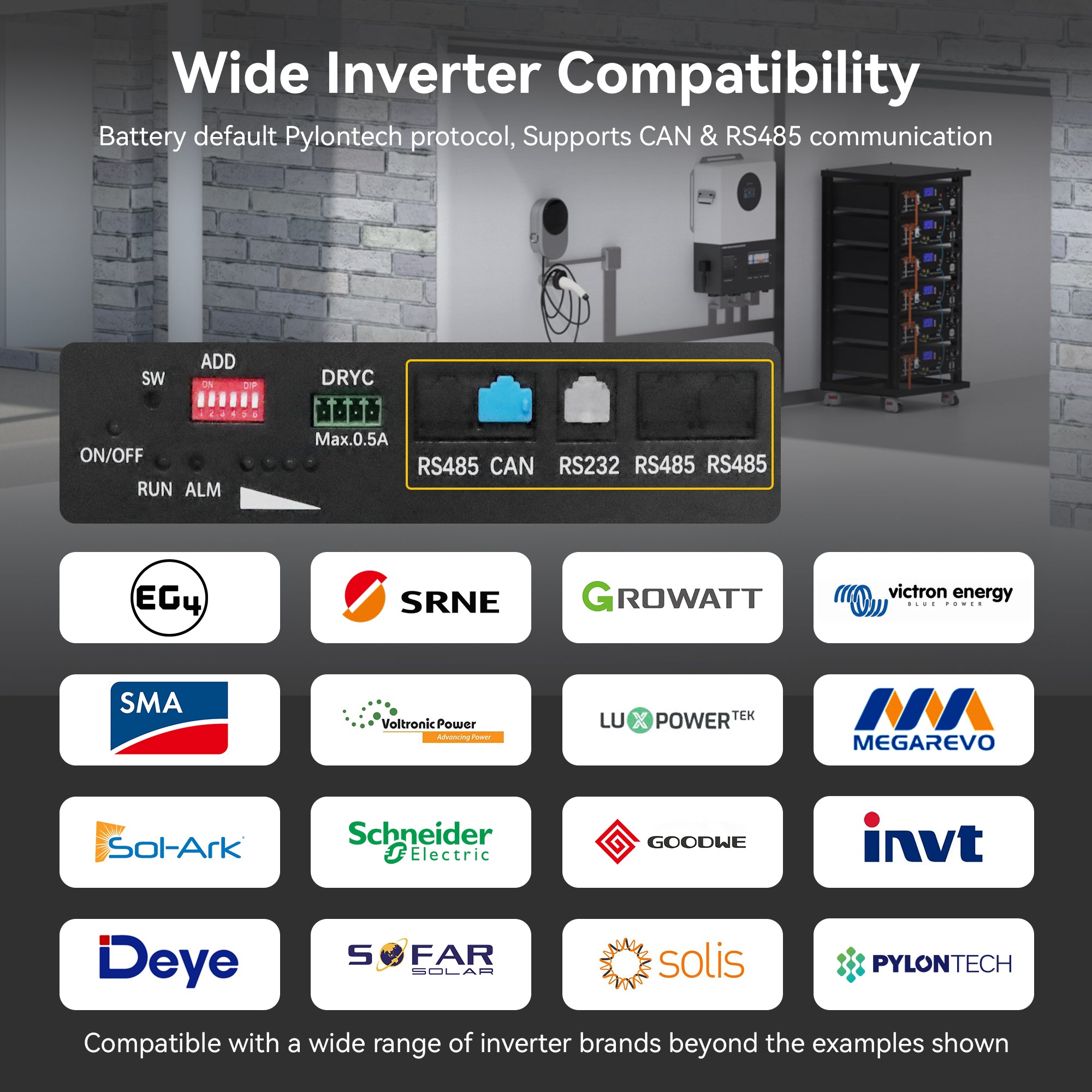
CAN and RS485 describe communication interfaces. They do not identify one universal battery language. Before buying, confirm the protocol, pinout, cable, battery profile, firmware, and address settings for the exact battery and inverter models.
| Communication item | Battery evidence | Inverter evidence |
|---|---|---|
| Interface | Specified CAN or RS485 port | Specified battery communication port |
| Protocol | Supported protocol and selectable setting | Supported battery brand/profile or protocol |
| Cable | Required connector and pin definition | Matching connector and pin definition |
| Software | Battery firmware or protocol version | Compatible inverter firmware and selected battery profile |
| Parallel bank | Master/slave and address rules | Connection to the designated master battery |
Ask for a written model-to-model setup reference when available. A list of inverter brand names is weaker evidence than an exact model, firmware, protocol, cable, and configuration.
Check Rack Fit, Weight, and Environment
A rack battery must be supported as equipment, not treated as a box that can sit anywhere. Confirm the module dimensions and weight from the exact manual, then check the rack, shelf, cabinet, rails, or support system that will carry it.
Your layout should document:
- usable rack width, depth, and vertical space;
- cabinet and shelf load ratings;
- full bearing support and restraint for every module;
- clearance for power cables, communication cables, bend radius, and strain relief;
- access to breakers, indicators, displays, terminals, and address switches;
- temperature, moisture, dust, and ventilation conditions;
- space to isolate, inspect, or remove one module;
- future expansion without blocking service access.
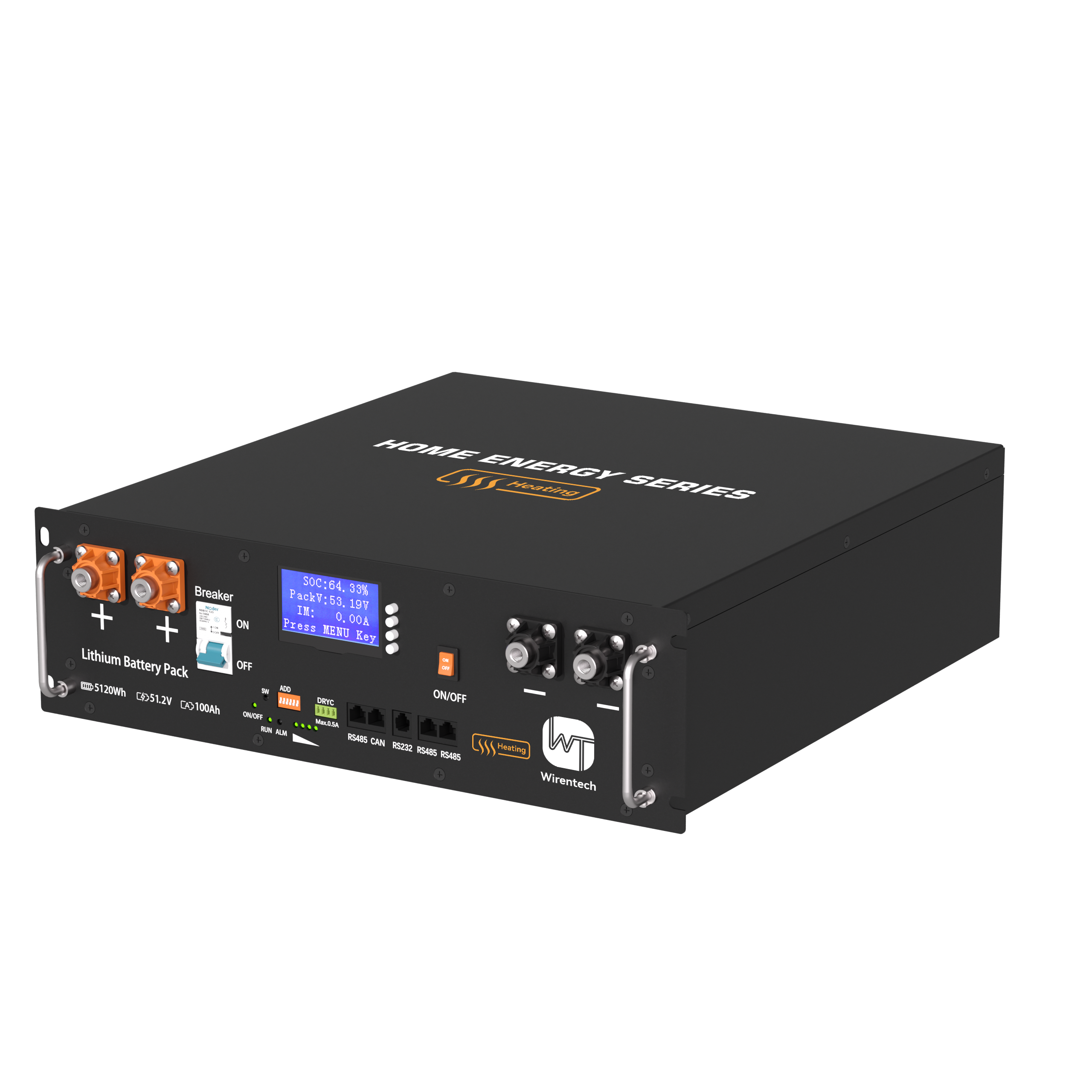
The WT5100 manual lists an IP22 enclosure rating. That rating should not be presented as outdoor weather protection. The final location must follow the exact manual and applicable electrical, structural, and installation requirements.
If you are still deciding between enclosure styles, compare rack and floor-standing batteries before finalizing the room and cabinet layout.
Plan Parallel Expansion Before the First Purchase
Expansion is easiest when it is designed into the first installation. Record the approved maximum module quantity, but do not confuse a product maximum with a recommended residential bank size.
Before reserving space for later modules, verify:
- whether future batteries must be the same model, revision, capacity, and firmware;
- the required state-of-charge procedure before connecting modules;
- master and slave roles, DIP-switch addresses, and communication order;
- conductor, busbar, fuse, breaker, disconnect, and cabinet limits;
- how equal current paths will be maintained where required;
- whether the inverter imposes a lower practical battery-bank limit;
- how the updated system will be documented and recommissioned.
A battery that supports many parallel modules still requires a complete electrical and mechanical design. Treat future expansion as a planned system change, not a simple add-on purchase.
Read the Exact Documents, Not the Badge
Document review protects against two common buying mistakes: using a certificate for the wrong model and treating a component or module document as approval for an entire installed system.
| Document | Verify before relying on it | Do not assume |
|---|---|---|
| User manual | Exact model, variant, revision, ratings, interfaces, installation conditions, and operating rules | That another visually similar version has the same limits or features |
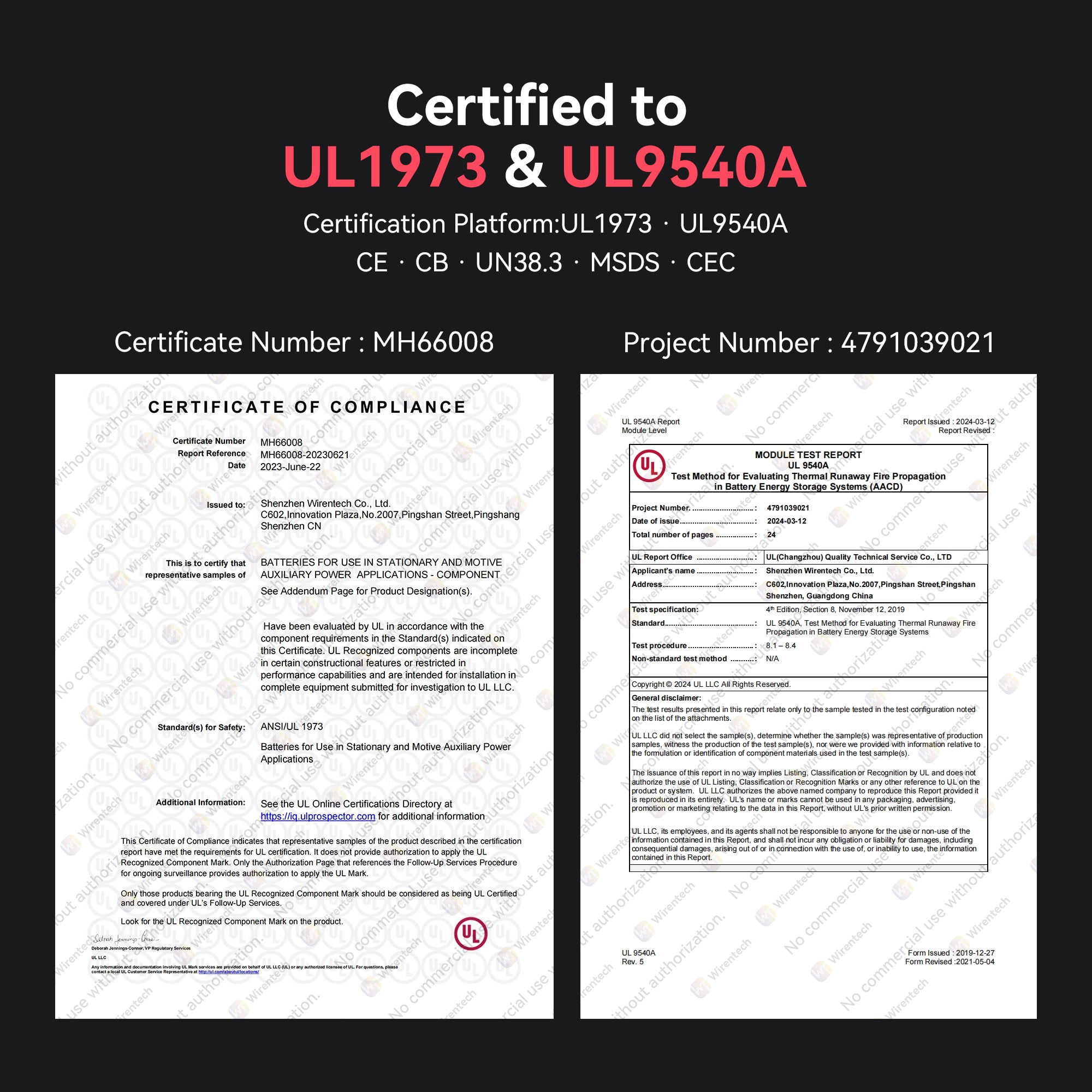
| UL 1973 certificate | Certificate holder, exact model, product category, standard, date, and scope | Certification of the inverter, cabinet, wiring, or complete energy-storage system |
| UL 9540A report | Exact sample, model, module or system level, configuration, test method, and report date | UL Listing or automatic acceptance of every installation |
| Warranty and support terms | Current public policy, eligible products, exclusions, proof requirements, and support route | That an older manual and current store policy use identical terms |
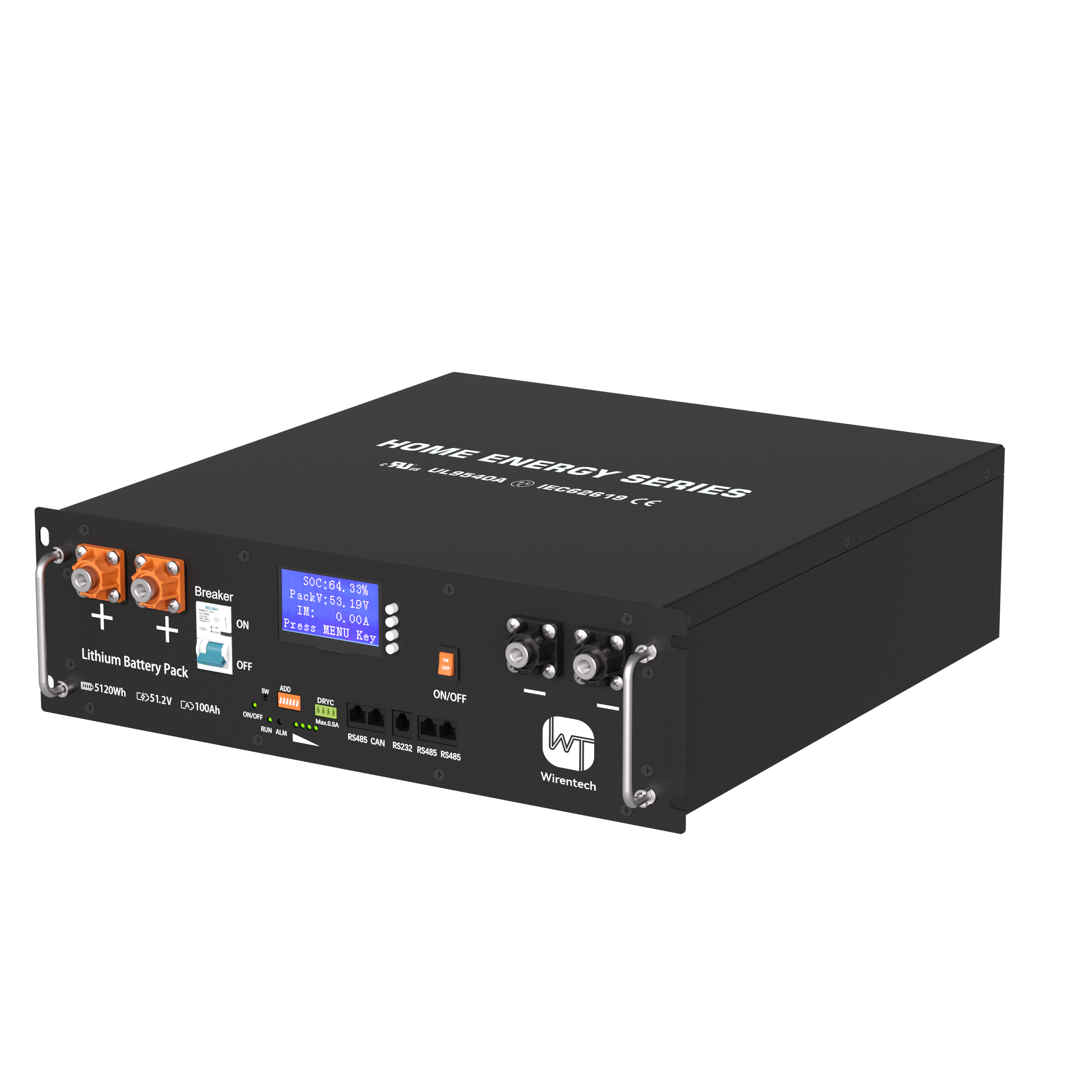
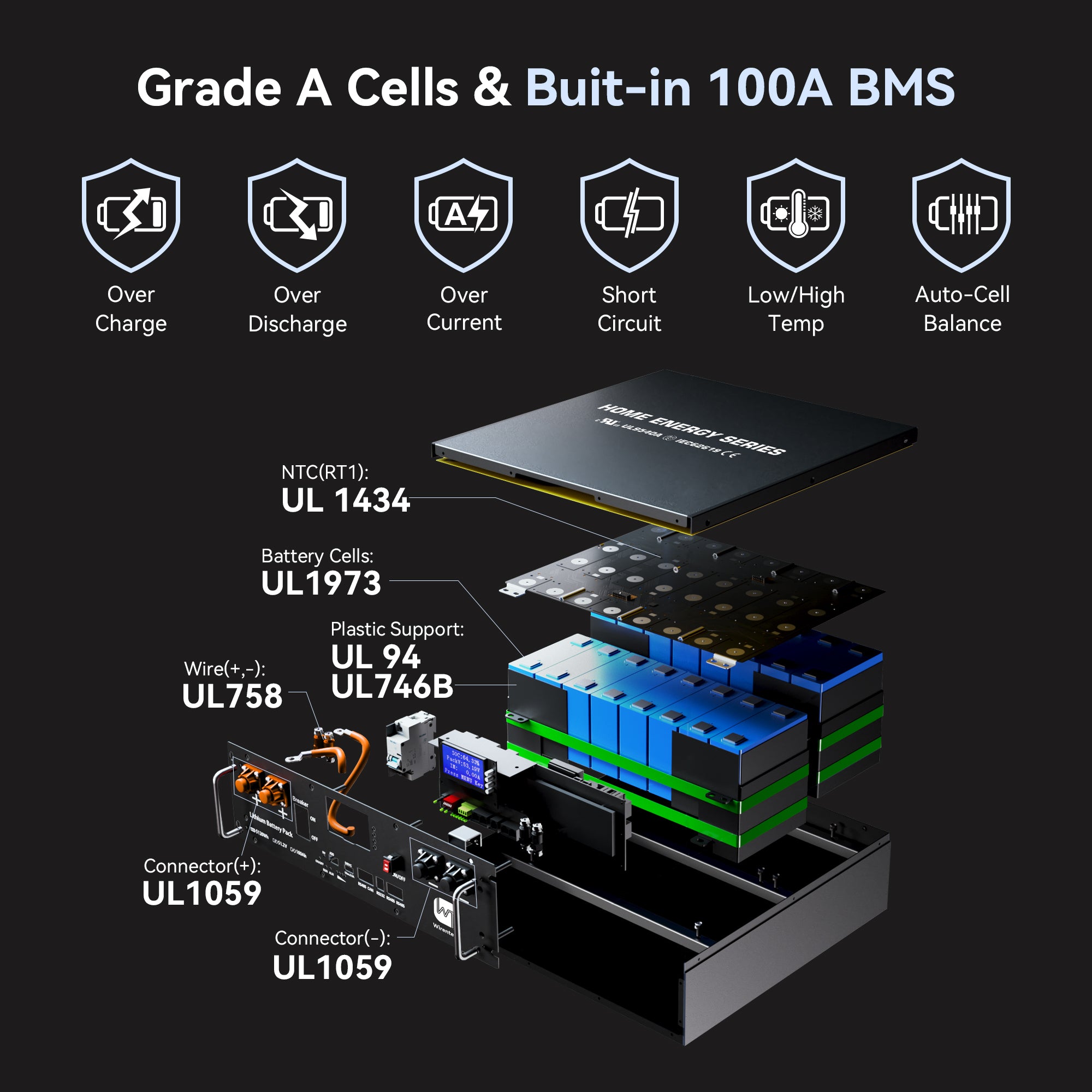
For WT5100 UL, the current product page links a UL 1973 certificate that identifies model WT5100 and a separate UL 9540A module-level test report that identifies WT5100, 51.2V, and 100Ah. Those documents apply to the exact UL version and should not be transferred to the separate WT5100 self-heating product.
Use WT5100 UL as an Exact-Model Example
The Wirentech WT5100 UL can be evaluated against the same checklist. Its current manual and linked documents provide the following exact-model evidence:
| Buying-check item | Verified WT5100 UL evidence | Buyer action still required |
|---|---|---|
| Nominal architecture | 51.2V, 100Ah, 5.12kWh | Calculate required energy and module count from actual loads. |
| Operating and charging | 40V-58.4V operating range; 58.4V adjustable maximum charge voltage; 50A recommended charge current at 77°F | Confirm that the exact inverter can use settings within these limits. |
| Continuous discharge | 100A at 77°F | Compare bank output with continuous and surge DC demand. |
| Communication | CAN and RS485 interfaces for inverter communication | Verify exact protocol, cable, profile, pinout, firmware, and settings. |
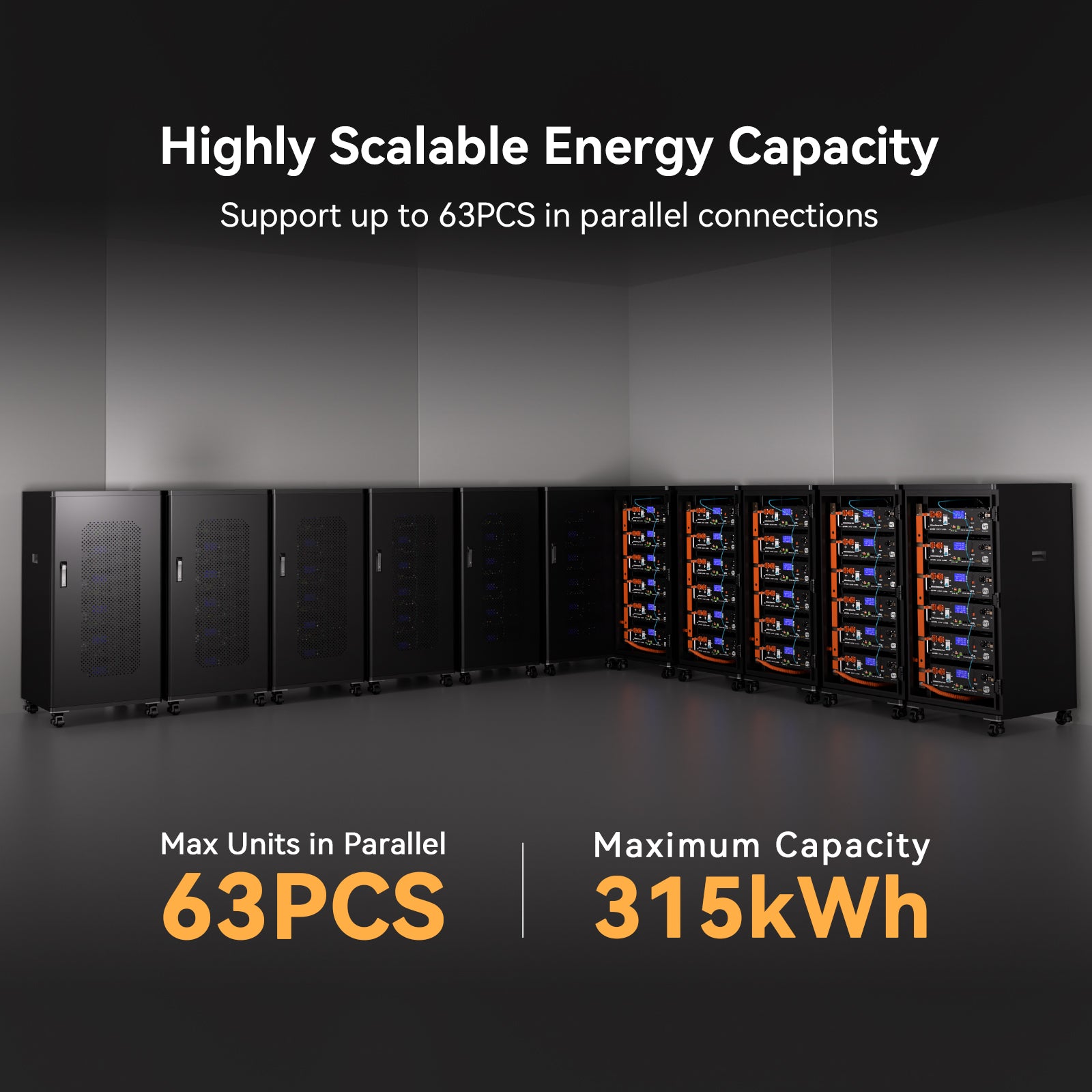
| Expansion | Manual lists a maximum of 63 units in parallel | Design the complete bank, cabinet, conductors, protection, addressing, and commissioning process. |
| Environment | IP22 enclosure rating | Choose an installation location that satisfies the manual and local requirements. |
| Safety documents | Exact-model UL 1973 certificate and WT5100 module-level UL 9540A report linked by the current product page | Confirm document scope against project, permitting, installer, insurer, and jurisdiction requirements. |
| Warranty | Current WT5100 UL commercial warranty: 10 years | Read the current terms, eligibility, exclusions, proof requirements, and support route before ordering. |
Specifications, document links, and the current 10-year warranty presentation were rechecked on September 7, 2026. Prices, availability, warranty terms, document revisions, and product-page wording can change and must be checked again on publication and purchase dates.
Use the planned WT5100 UL specification guide when a voltage, current, communication, expansion, or enclosure rating needs a deeper explanation.
If the documented voltage, current, communication, installation, and evidence requirements match your plan, review the current Wirentech WT5100 UL 51.2V 100Ah server rack battery. Buyers who still need to compare storage formats can review the Wirentech energy storage battery collection before choosing a final system layout.
Complete the Checklist Before You Order
- Attach the finished load and runtime worksheet.
- Record the inverter's exact model and firmware.
- Compare the complete battery and inverter voltage ranges.
- Set a documented charge-voltage and charge-current plan.
- Confirm continuous and surge demand against the complete battery bank.
- Obtain the exact communication protocol, cable, pinout, profile, and address instructions.
- Confirm module dimensions, weight, cabinet support, environmental limits, and service clearances.
- Document conductors, protection, isolation, busbars, and future expansion.
- Match every certificate and test report to the exact model and document scope.
- Recheck current product availability, warranty terms, included accessories, and support details.
A server rack battery is ready to buy only when it fits the electrical design, mechanical layout, documentation requirements, and future plan. Finish those checks first, then compare price and place the order.
Frequently Asked Questions
Is 51.2V 100Ah enough information to choose a rack battery?
No. Those values describe nominal voltage and capacity. You still need the operating range, charging limits, continuous current, inverter communication, installation conditions, documentation, and expansion rules.
Does a CAN port mean a battery will work with my inverter?
No. The exact protocol, pinout, cable, battery profile, firmware, and configuration must agree. Confirm compatibility for the exact battery and inverter models.
Can I size a battery bank from inverter power alone?
No. Inverter power helps define current and peak-load requirements, but backup runtime depends on energy use over time. Size energy and power separately, then verify both against the complete system.
Does a UL 9540A report mean the complete home battery system is UL Listed?
No. UL 9540A is a thermal-runaway fire-propagation test method. Review whether the report is at the cell, module, unit, or installation level and do not treat the report by itself as a UL Listing for the complete installed system.
Should I buy extra modules for future expansion now?
That depends on load growth, budget, module-matching rules, inventory continuity, cabinet space, inverter limits, and the manufacturer's expansion procedure. Design the expansion path before deciding when to purchase additional modules.
![[Pre-Order] Wirentech 12kW Hybrid Solar Inverter with Bypass for Home Energy Storage](http://wirentechshop.com/cdn/shop/files/12bp_bdcf00b1-989c-4581-bd54-0974ab610f28.png?v=1788318623&width=2000)
![[Pre-Order] Wirentech 12kW Hybrid Solar Inverter with Bypass for Home Energy Storage](http://wirentechshop.com/cdn/shop/files/G01-purchase-overview-2000x2000_239b36c9-5789-4dde-ac70-4fa1f1710694.jpg?v=1788855790&width=2000)
![[Pre-Order] Wirentech 12kW Hybrid Solar Inverter with Bypass for Home Energy Storage](http://wirentechshop.com/cdn/shop/files/G02-application-fit-2000x2000_ed7587c3-7052-442c-8988-58b2b01e63c2.jpg?v=1788855790&width=2000)
![[Pre-Order] Wirentech 12kW Hybrid Solar Inverter with Bypass for Home Energy Storage](http://wirentechshop.com/cdn/shop/files/G03-solar-input-2000x2000_767280a4-e107-4dfe-9ecf-ae5577ec7c7c.jpg?v=1788855790&width=2000)


Share:
How to Choose a Server Rack Battery for Solar
Is a 5.12kWh Rack Battery Enough for Home Backup?