
When choosing a lithium battery for home energy storage, solar backup, or off-grid applications, many buyers see self-heating features and wonder:
Do I actually need a heated LiFePO4 battery, or is a standard battery enough?
The answer depends mainly on where your battery will be installed and how cold the environment gets during charging.
A self-heating battery is not designed for everyone. It solves a specific problem: maintaining safe charging performance when temperatures are too low.
For most indoor residential installations, a standard LiFePO4 battery is usually enough. However, for cold garages, outdoor systems, RVs, cabins, and off-grid locations, a self-heating battery can provide additional flexibility.
Start With Your Home Energy Storage System
Before deciding whether you need heating functionality, you should first understand your overall battery system requirements.
If you are still comparing different home energy storage solutions, read our complete guide:
How to Choose the Right Home Energy Storage Battery
This guide explains:
- Rack battery vs wall-mounted battery
- Battery sizing
- Solar storage requirements
- Different battery configurations
What Is a Self-Heating LiFePO4 Battery?
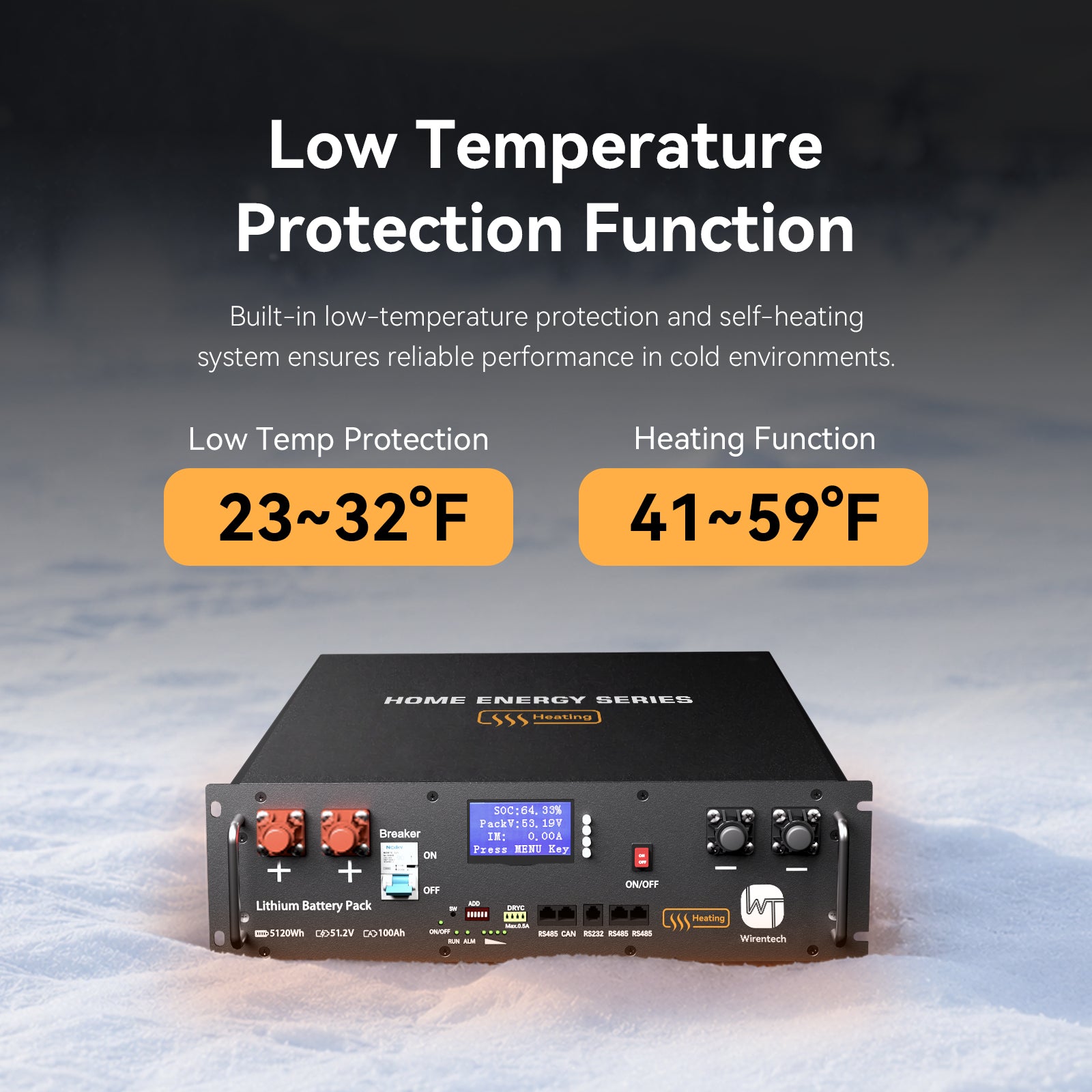
A self-heating LiFePO4 battery is a lithium iron phosphate battery equipped with an internal heating system designed to warm the battery cells when temperatures are too low for normal charging.
LiFePO4 chemistry is widely used in home energy storage because of its long cycle life, stability, and safety characteristics.
However, like most lithium batteries, charging performance can be affected by low temperatures.
A self-heating system helps solve this challenge by managing battery temperature before or during charging.
Why Does Cold Temperature Matter for Lithium Batteries?
Temperature has a direct impact on lithium battery performance.
In cold conditions:
- Charging efficiency can decrease
- Charging speed may be reduced
- Battery protection systems may limit charging
- Available capacity may temporarily decrease
The most important difference is between battery discharge performance and battery charging conditions.
A lithium battery may still provide power in cold weather, but charging at very low temperatures requires additional protection.
Who Should Choose a Self-Heating LiFePO4 Battery?
A self-heating battery is mainly designed for users who install batteries in cold environments.
Cold Weather Installations That Benefit From Self-Heating
Self-heating batteries are better suited for:
- Unheated garages
- Outdoor battery cabinets
- Cabins
- RVs used in winter
- Off-grid locations
- Seasonal properties
These environments may experience temperatures where standard batteries need additional charging protection.
When a Standard LiFePO4 Battery Is Usually Enough
A standard LiFePO4 battery is usually enough if your battery is installed in:
- Indoor utility rooms
- Temperature-controlled garages
- Basements
- Residential storage areas
For many home solar storage systems, installation location matters more than climate alone.
A battery installed indoors in a cold region may have different requirements from a battery installed outside in the same region.
Self-Heating vs Standard LiFePO4 Battery Comparison
| Factor | Self-Heating LiFePO4 Battery | Standard LiFePO4 Battery |
|---|---|---|
| Cold weather charging | Better suited | Requires suitable temperature |
| Best environment | Cold garages, outdoor systems | Indoor installations |
| System complexity | Higher | Simpler |
| Initial cost | Higher | Lower |
| Energy storage performance | Similar chemistry | Similar chemistry |
| Best user | Cold climate users | Most residential users |
How Does a Self-Heating Battery Work?
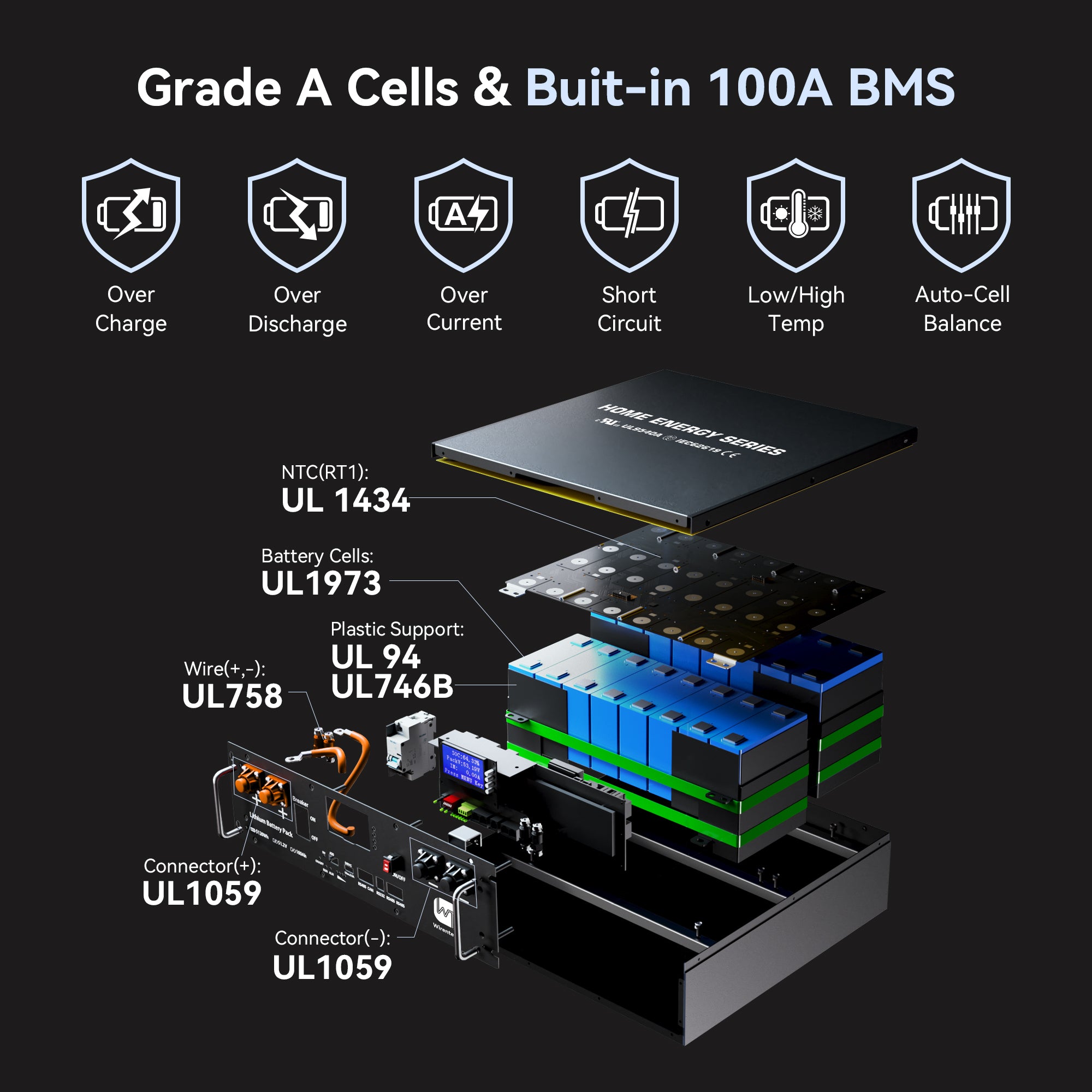
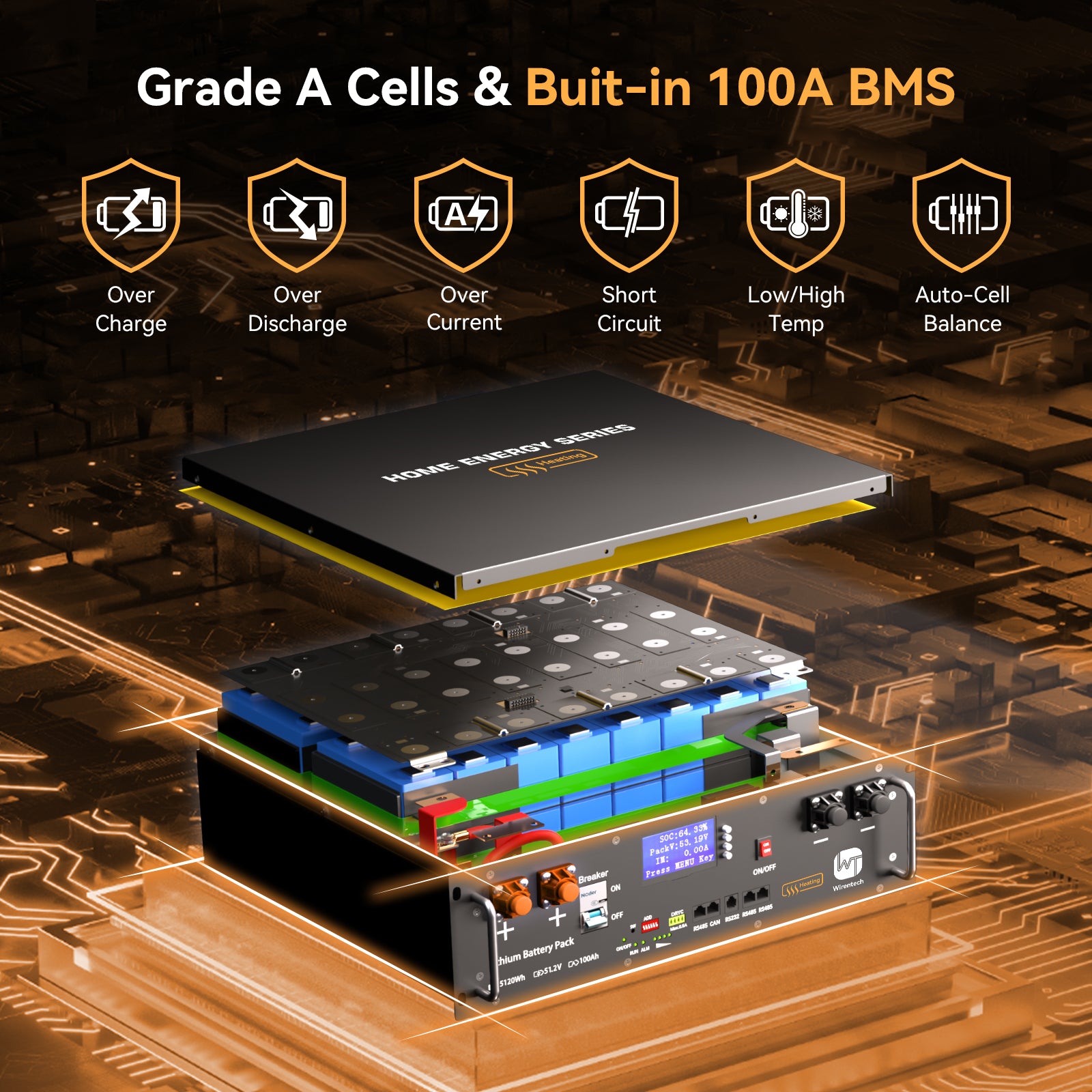
A self-heating LiFePO4 battery uses an internal heating element controlled by the battery management system (BMS).
The general process:
- Battery temperature is monitored.
- The system detects low-temperature conditions.
- Heating activates when charging conditions require it.
- Charging begins when the battery reaches a suitable temperature range.
The goal is not to heat the battery constantly.
The goal is to maintain safer charging conditions in cold environments.
Do You Need a Self-Heating Rack Battery for Home Solar Storage?
For most residential solar systems, the decision depends on installation location.
Standard Rack Battery Is Usually Enough If:
- Battery is installed indoors
- Temperature remains stable
- The system is not exposed to freezing conditions
Self-Heating Rack Battery Is Better If:
- Battery is installed in a cold garage
- Winter temperatures regularly drop below freezing
- Charging is expected in cold conditions
Self-Heating Battery vs Standard Rack Battery: Decision Guide
| Your Situation | Recommended Choice |
|---|---|
| Indoor home energy storage | Standard LiFePO4 rack battery |
| Heated utility room | Standard LiFePO4 rack battery |
| Cold garage | Self-heating battery |
| Outdoor installation | Self-heating battery |
| Winter RV or cabin use | Self-heating battery |
| Off-grid cold climate system | Self-heating battery |
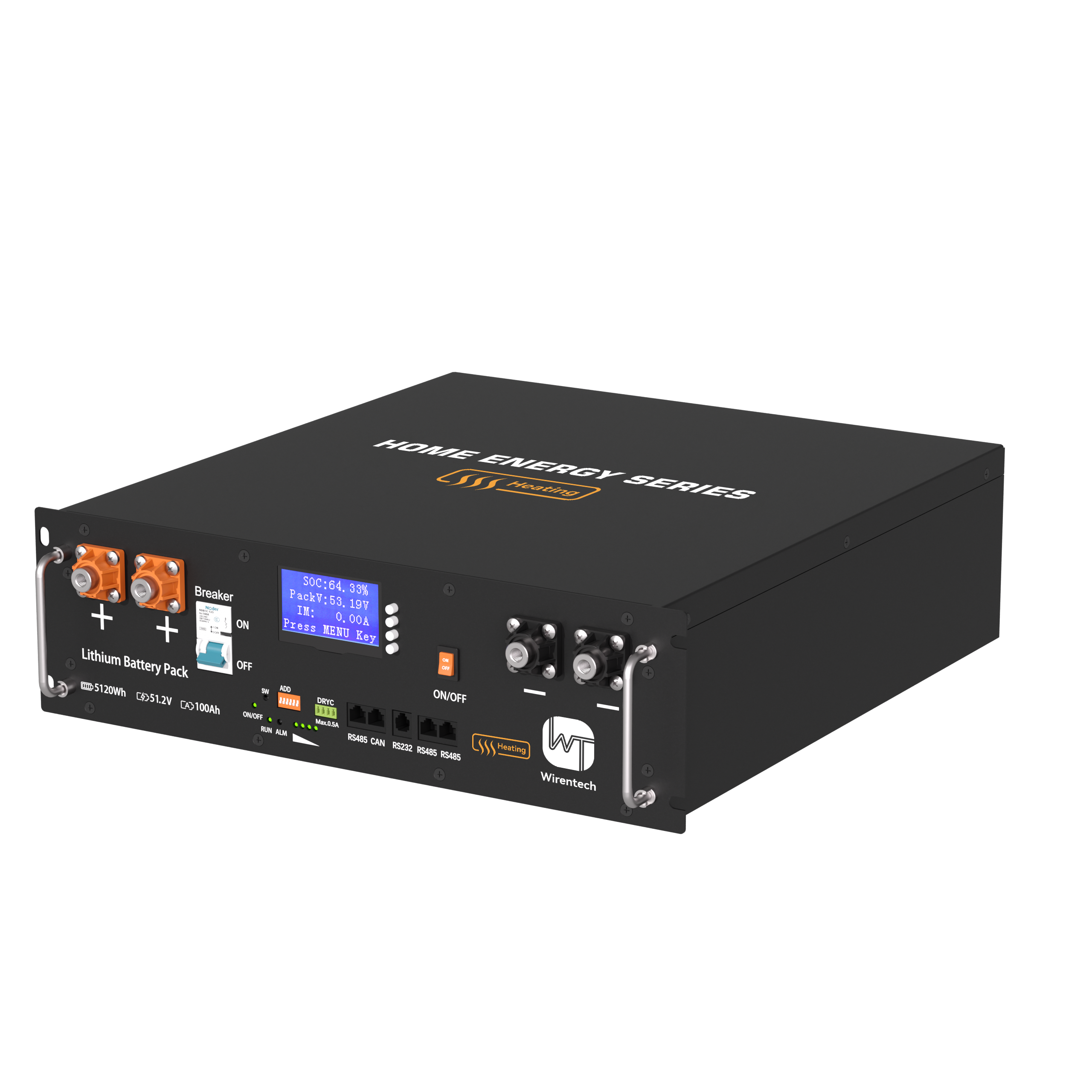
Recommended System: Wirentech Self-Heating Rack Battery
For users who need cold-weather charging support, a self-heating rack battery provides a more suitable solution.
Wirentech self-heating rack battery is designed for users who need:
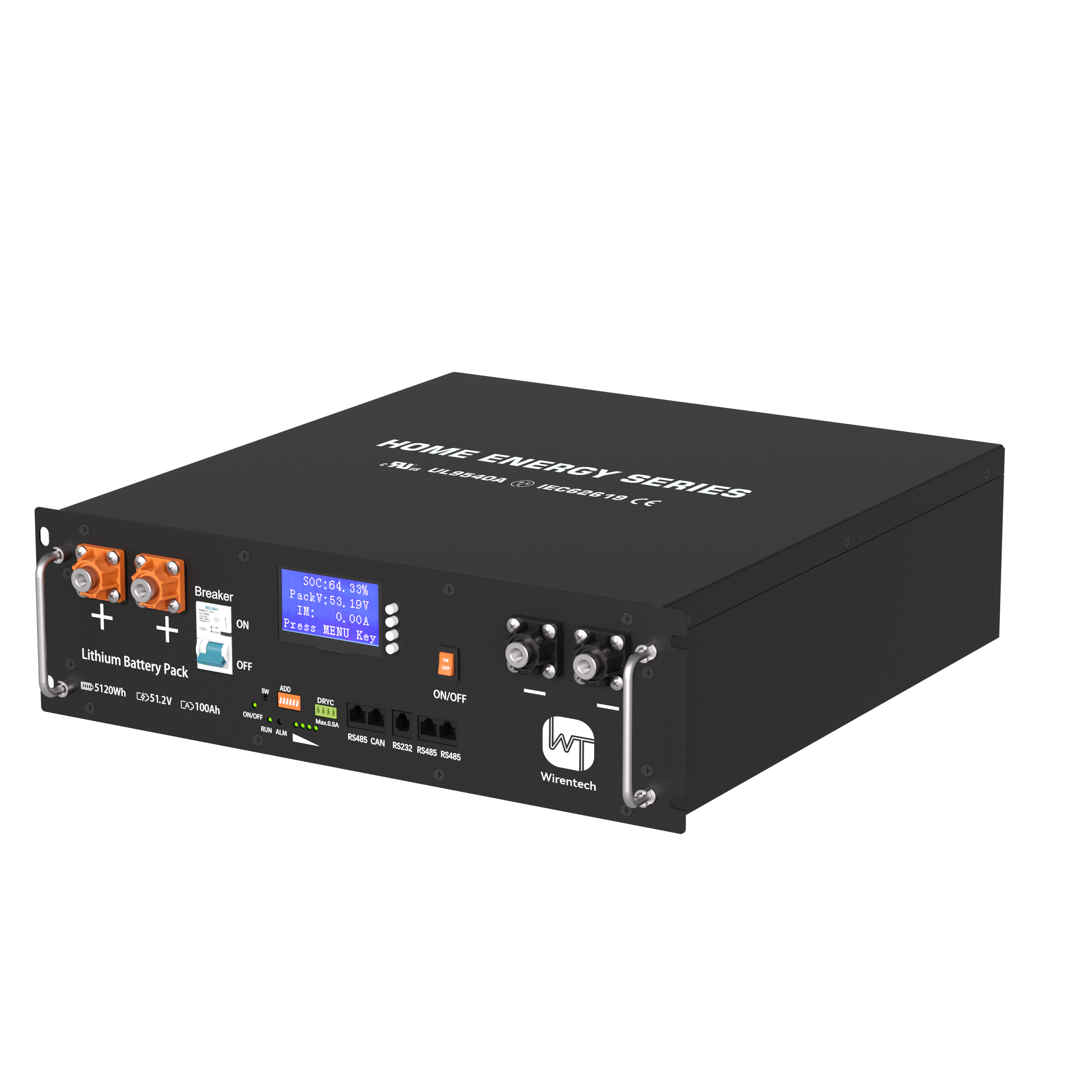
- 51.2V LiFePO4 energy storage
- Rack-mounted installation
- Cold environment charging support
- Solar backup applications
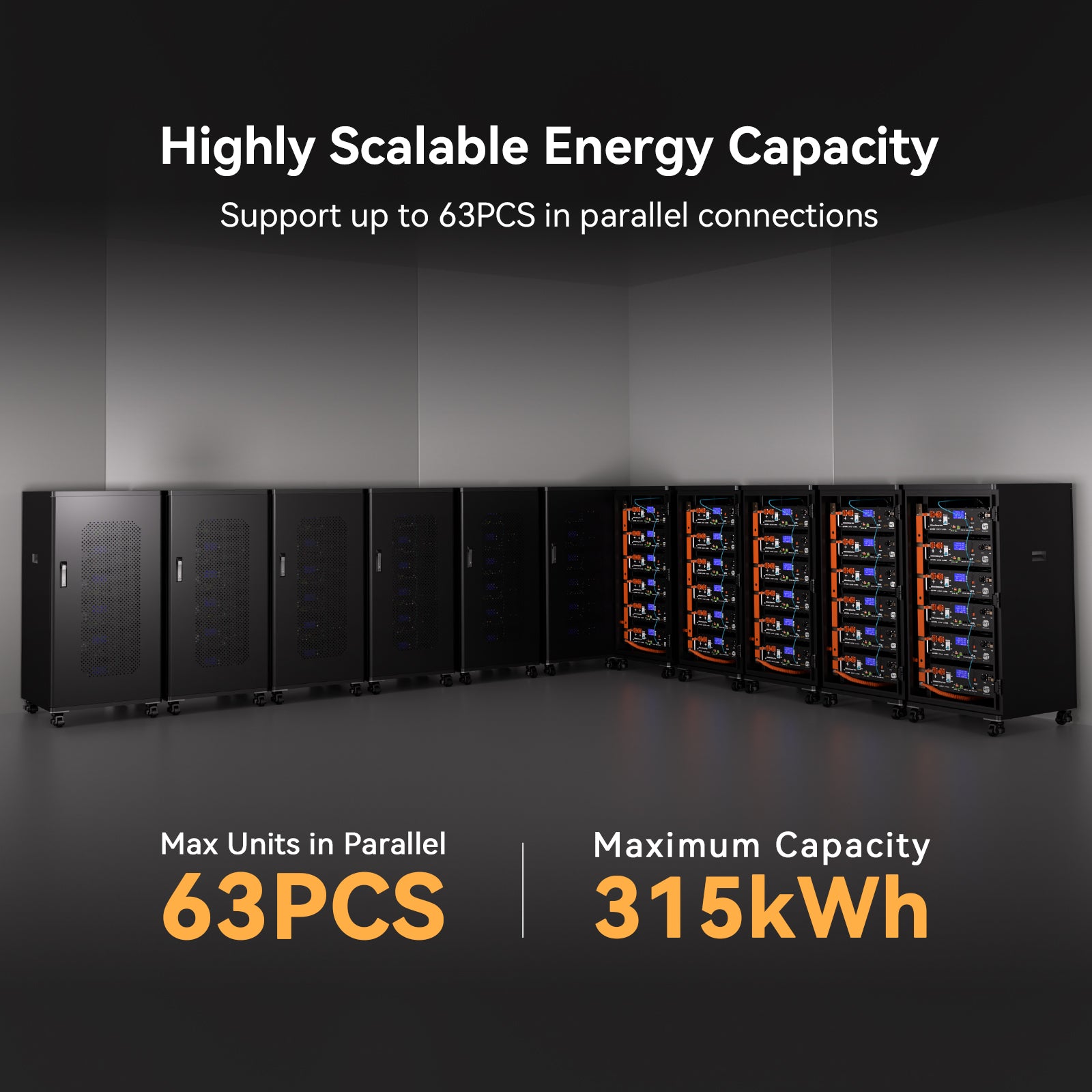
- Expandable battery systems
For users who do not need low-temperature charging support, the standard WT5100 rack battery remains a practical option for residential energy storage.
How to Choose Between Standard and Self-Heating Batteries
The decision is simple:
Choose a Standard LiFePO4 Rack Battery If:
- Your battery is installed indoors
- Temperature is controlled
- You mainly use home solar storage
Choose a Self-Heating LiFePO4 Battery If:
- Your battery is installed in cold areas
- Charging may happen during freezing temperatures
- You need more flexibility for outdoor or seasonal use
The best battery is not always the one with more features.
It is the one that matches your installation environment.
Final Decision: Do You Need a Self-Heating LiFePO4 Battery?
For most residential users:
A standard LiFePO4 battery is enough when installed in a suitable environment.
For users in cold climates:
A self-heating battery provides additional charging support and installation flexibility.
The key factor is not where you live.
The key factor is:
Where will the battery be installed, and at what temperature will it charge?
Frequently Asked Questions
What is a self-heating LiFePO4 battery?
A self-heating LiFePO4 battery is a lithium battery with an integrated heating system that helps maintain suitable charging conditions in cold environments.
Do LiFePO4 batteries need heating?
Not always. Most indoor residential systems do not require heating, but cold-weather installations may benefit from self-heating functionality.
Can I use a standard LiFePO4 battery in cold weather?
Yes, but charging conditions must remain within the battery’s recommended operating range.
Is a self-heating battery better than a standard battery?
A self-heating battery is not universally better. It is better for cold environments, while standard batteries are often the better choice for normal indoor installations.
Do I need a self-heating battery for solar storage?
Most indoor solar storage systems do not need heating. Outdoor or cold-climate systems may require it.
Should I choose a self-heating rack battery or standard rack battery?
Choose based on installation temperature. Cold environments require self-heating; stable indoor environments usually do not.
Product Selection Support
Choosing between a standard and self-heating LiFePO4 battery depends on:
- Installation location
- Local climate
- Charging conditions
- Solar system design
- Future expansion plans
Wirentech can help you select the right rack battery configuration for your home energy storage system.
![[Pre-Order] Wirentech 12kW Hybrid Solar Inverter with Bypass for Home Energy Storage](http://wirentechshop.com/cdn/shop/files/12bp_bdcf00b1-989c-4581-bd54-0974ab610f28.png?v=1788318623&width=2000)
![[Pre-Order] Wirentech 12kW Hybrid Solar Inverter with Bypass for Home Energy Storage](http://wirentechshop.com/cdn/shop/files/G01-purchase-overview-2000x2000_239b36c9-5789-4dde-ac70-4fa1f1710694.jpg?v=1788855790&width=2000)
![[Pre-Order] Wirentech 12kW Hybrid Solar Inverter with Bypass for Home Energy Storage](http://wirentechshop.com/cdn/shop/files/G02-application-fit-2000x2000_ed7587c3-7052-442c-8988-58b2b01e63c2.jpg?v=1788855790&width=2000)
![[Pre-Order] Wirentech 12kW Hybrid Solar Inverter with Bypass for Home Energy Storage](http://wirentechshop.com/cdn/shop/files/G03-solar-input-2000x2000_767280a4-e107-4dfe-9ecf-ae5577ec7c7c.jpg?v=1788855790&width=2000)


Share:
5kWh vs 10kWh vs 20kWh Battery Backup: Which Size Do You Need?
Server Rack Battery vs Powerwall Battery: Which One Should You Choose?