
How to Size an Off-Grid Solar System: Battery, Inverter and Solar Panel Guide
An off-grid solar system must do more than cover an average electricity bill. It has to run the loads that overlap, start motors without tripping, store enough energy for nights and poor weather, and recharge before the next difficult period. Before comparing panels or batteries, check three things: how many kilowatt hours the home uses each day, which appliances can run at the same time, and how many low-solar days the system must survive. This guide turns those answers into a practical sizing sequence for the inverter, battery bank, solar array and backup source.
Key Takeaways
- Reduce avoidable electric loads before buying more panels and batteries.
- Size inverter power from simultaneous loads and startup surge, not daily energy use.
- Size battery capacity from essential daily energy, desired autonomy and verified usable energy.
- Size the PV array with worst-season solar conditions instead of an annual average.
- Keep a backup charging plan when several poor-solar days could threaten essential loads.
- Treat the inverter, battery, solar array and backup source as one coordinated system.
What Is the Fastest Way to Size an Off-Grid Solar System?
Start with the loads, not the equipment. Make a twenty four hour list of every appliance, its measured power and its expected running time. Separate essential loads from optional loads. Then identify the highest group of loads that may operate together and note any motor startup surge.
Use the daily energy total to size storage and solar generation. Use the simultaneous power total to size the inverter. Use the number of cloudy days you want to cover to set the battery autonomy target. Finally, decide whether a generator or another charging source will cover rare periods that would otherwise require a much larger battery and PV array.
For most off-grid homes, the default recommendation is to design around efficient essential loads, one or two realistic days of battery autonomy, worst-season PV production and a properly integrated backup charger. Increasing storage without improving generation can leave a large battery chronically undercharged. Increasing PV without enough storage or controllable daytime loads can waste production.
Complete the Load Audit Before Choosing Hardware
A useful load audit records energy and power separately. Energy tells you how much electricity an appliance uses over time. Power tells you how hard the inverter must work at a specific moment.
For each appliance, multiply its measured watts by the number of hours it operates per day. Divide the result by one thousand to convert watt hours into kilowatt hours. Repeat this for refrigerators, freezers, lights, pumps, electronics, cooking appliances, heating equipment, cooling equipment and workshop tools.
Use a plug-in energy meter for variable appliances when possible. A refrigerator may show a high label wattage but cycle on and off. A water pump may run for only a few minutes but demand a strong startup surge. A well pump, compressor or induction motor can therefore have a modest daily energy total and still determine the inverter size.
Create three load groups. Essential loads include refrigeration, lighting, communications and necessary pumps. Flexible loads include laundry, dishwashing, tool charging and some cooking. High-demand loads include electric water heating, resistance space heating, electric vehicle charging, large air conditioners and continuous workshop equipment.
Reducing or rescheduling the last group often saves more system cost than comparing battery brands. Heating water with solar thermal, fuel or a controlled midday load can be easier than carrying that demand through the night on batteries. The same principle applies to space heating and other long-duration resistance loads.
How Should You Size the Off-Grid Inverter?
Add the power of all appliances that could reasonably run at the same time. Do not add every nameplate in the house unless they truly overlap. Then compare that simultaneous total with the inverter's continuous output rating.
Next, identify startup loads. Pumps, refrigerators, compressors and some power tools can briefly draw more power than their normal running level. Confirm that the inverter can support the required surge duration and that the battery bank can supply the corresponding DC current without reaching a battery management system limit.
An inverter should have practical headroom, but excessive oversizing also has trade-offs. A much larger inverter can have higher standby consumption, require larger cables and protection, and encourage future loads that the battery and PV array were not designed to support. Choose the smallest verified inverter configuration that covers the planned simultaneous loads, startup behavior and reasonable future growth.
How Much Battery Capacity Does an Off-Grid Home Need?
Begin with essential daily energy. Multiply that amount by the desired number of autonomy days. Then adjust for the verified usable portion of the battery, inverter losses, cold-weather limitations and any reserve that should remain for battery protection or emergency use.
For example, assume essential loads consume eight kilowatt hours per day and the owner wants two days of autonomy. The loads require sixteen kilowatt hours before losses and reserve are considered. If the system design allows eighty percent of nominal battery energy to be used and assumes about ninety percent conversion efficiency, the nominal battery target is roughly twenty two kilowatt hours. This is an illustration, not a universal setting. Use the current battery and inverter documentation for the final calculation.
One day of autonomy may be reasonable where winter solar is dependable and a generator is available. Two days is a practical starting point for many off-grid homes. More autonomy may be justified in remote sites, severe climates or locations where backup fuel is difficult to obtain. However, every additional day increases the battery capacity that the PV array must recharge.
Choose More Battery Capacity If
Choose more battery capacity if essential loads must continue through long outages, poor-solar periods are frequent, the home is difficult to access, or nighttime demand is consistently high. Confirm that the charging system can restore the larger bank within an acceptable time.
Choose Less Battery Capacity With Stronger Backup If
Choose a smaller battery bank with a reliable backup source if extended cloudy periods are rare, generator fuel and maintenance are manageable, and the owner prefers occasional backup operation over paying for storage that may be used only a few times each year.
How Should You Convert the Capacity Target Into Rack Batteries?
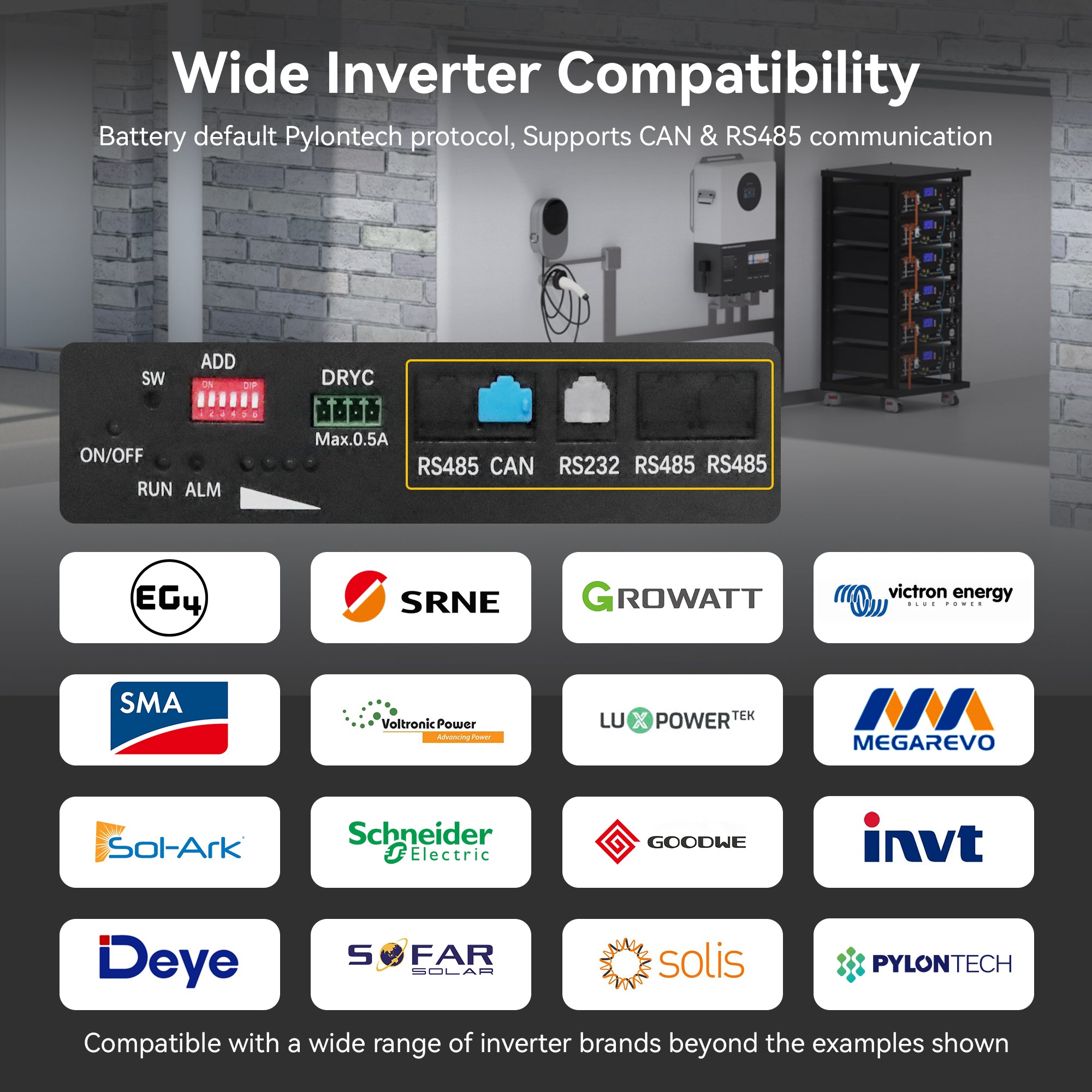
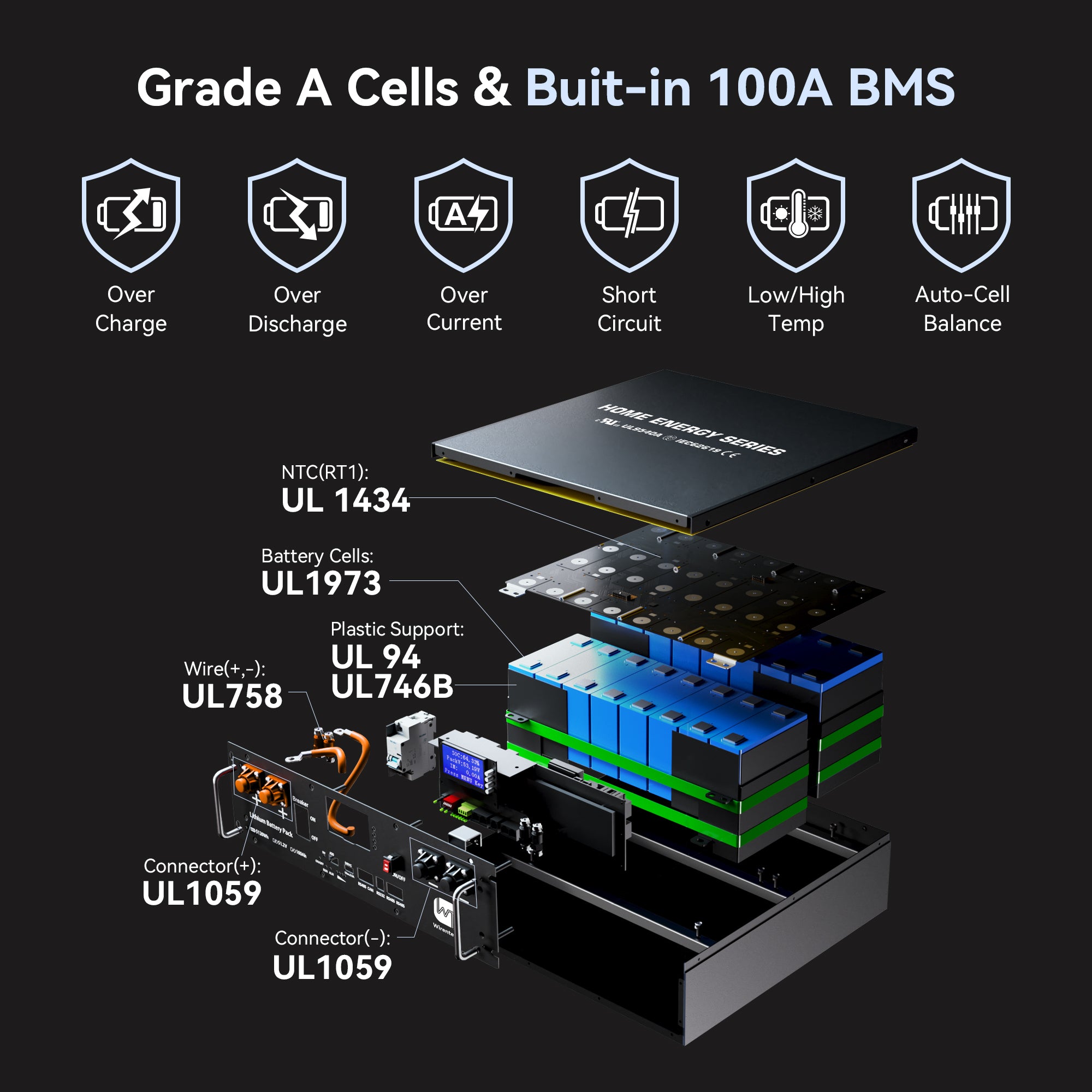
Compare the required usable energy with the verified usable energy of each battery module. Do not divide only by the advertised nominal capacity. Check the allowed depth of discharge, battery management system limits, charge and discharge current, inverter communication and the maximum supported parallel configuration.
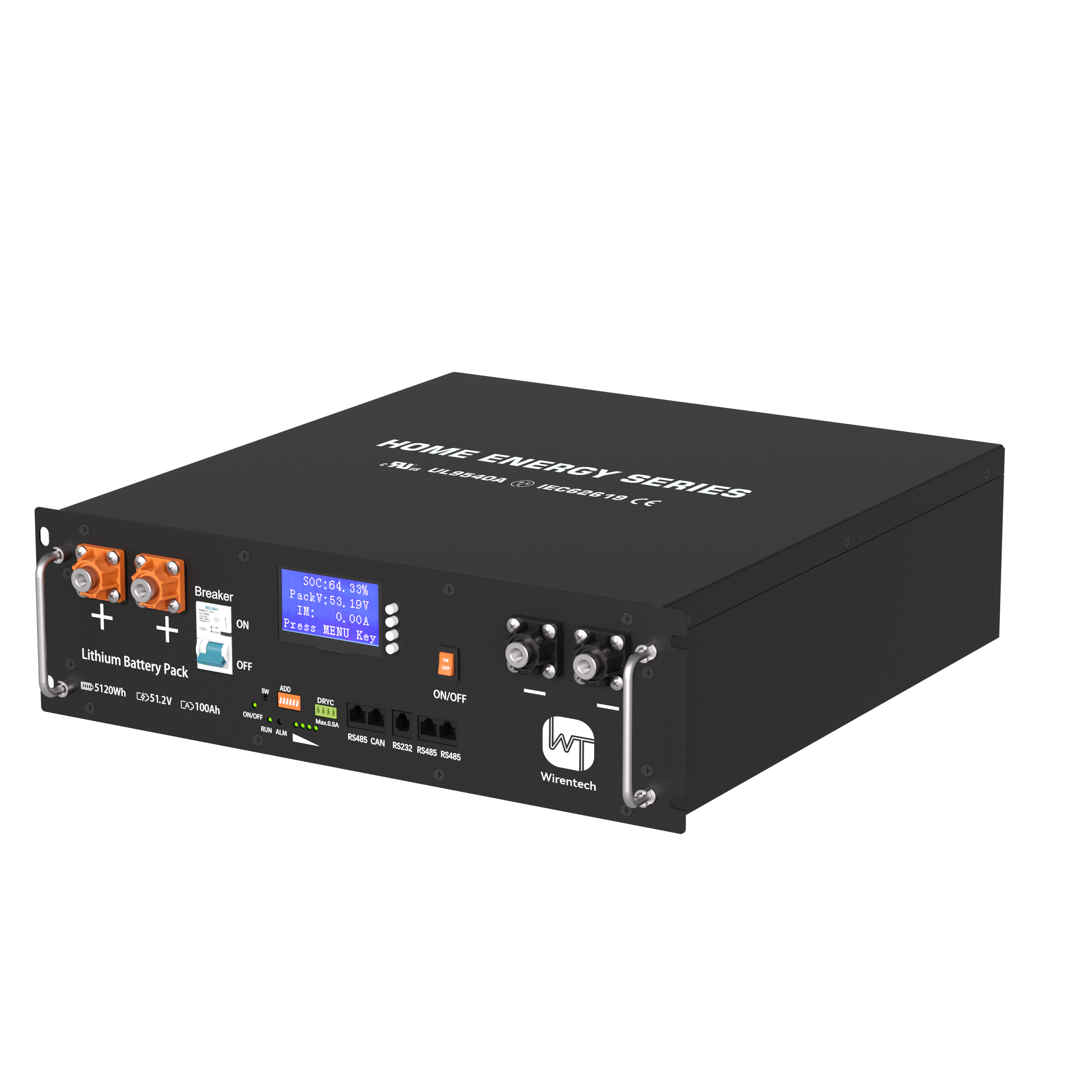
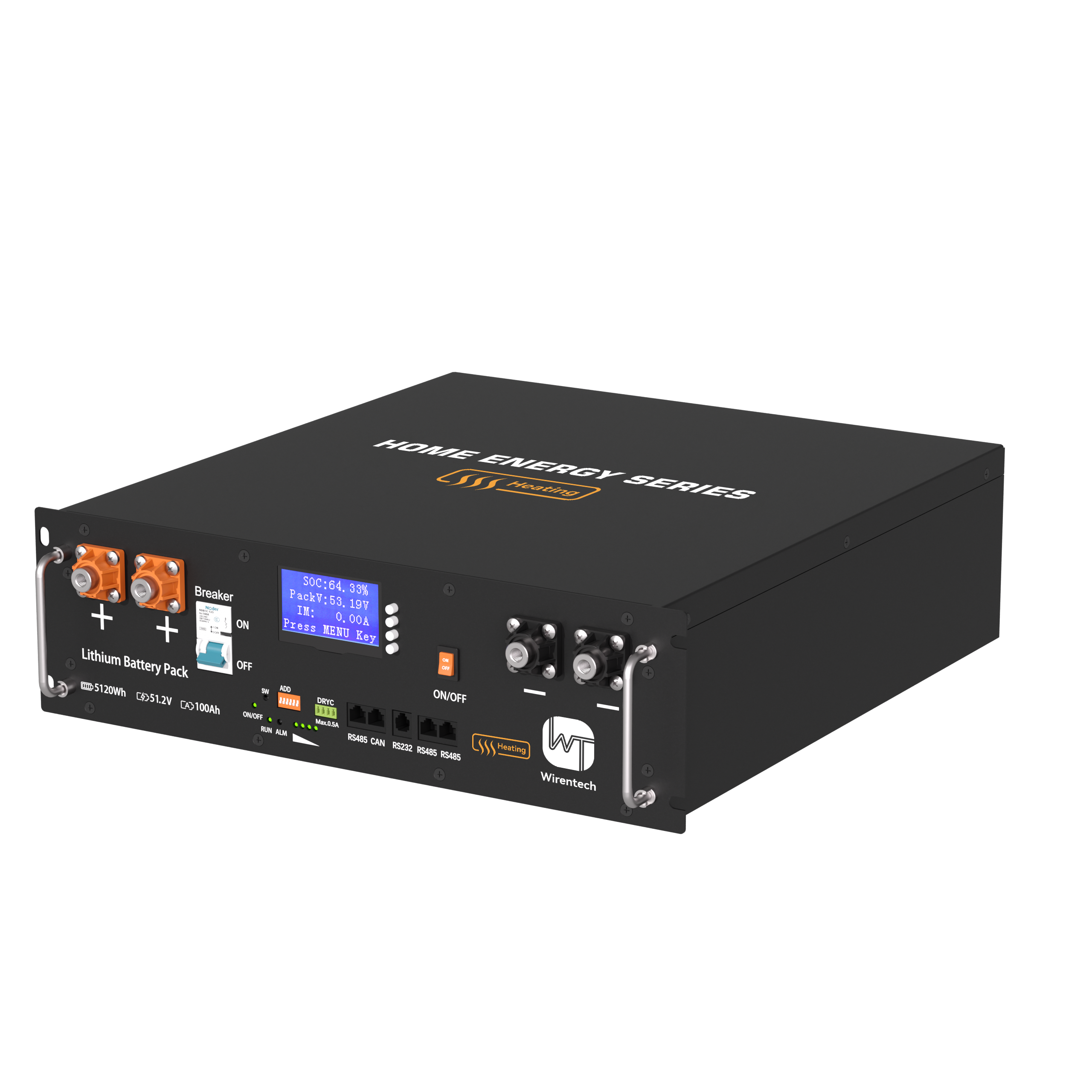
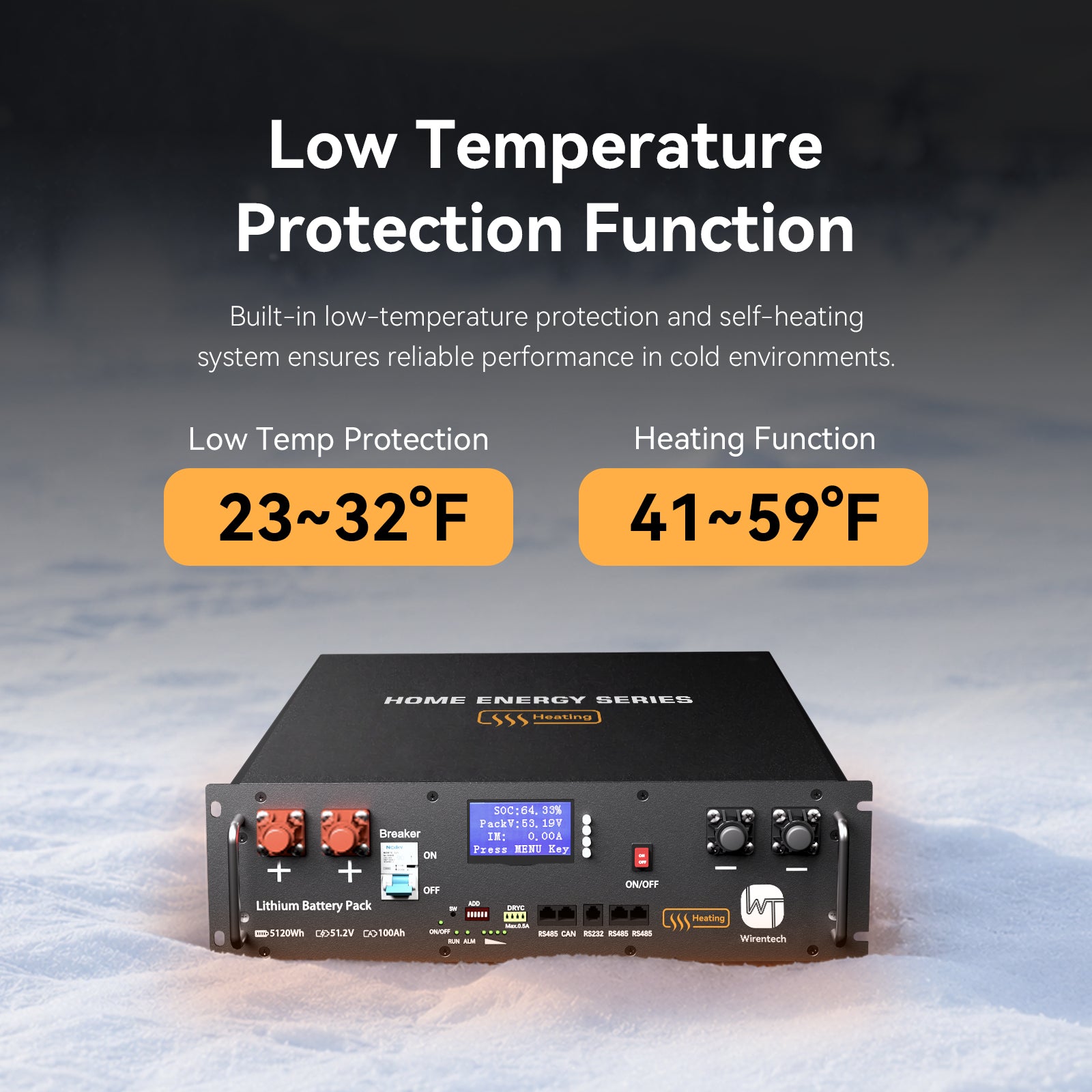
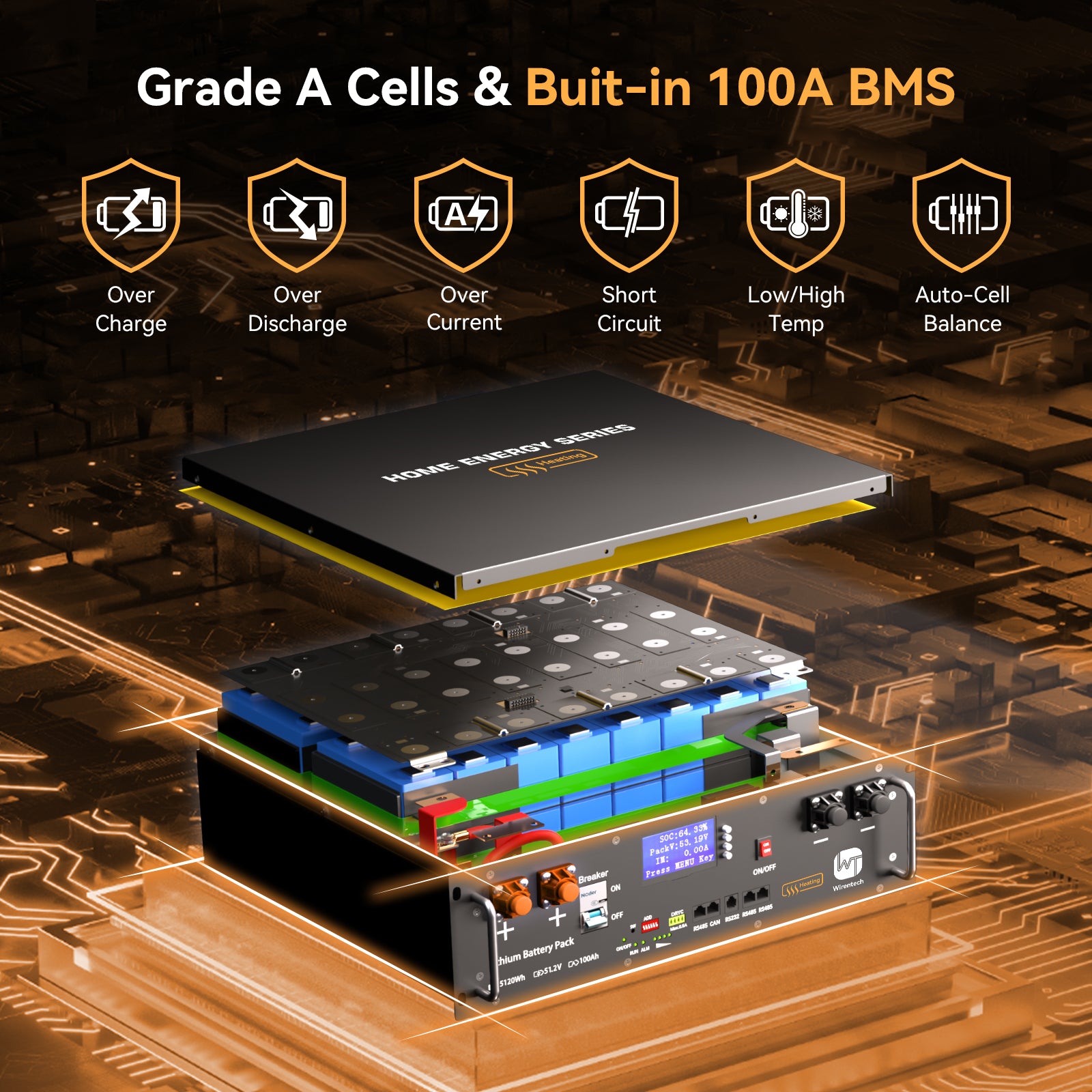
The WT5100 rack battery is positioned for homeowners who want modular residential storage. Each module uses a 51.2 volt, 100 amp hour architecture with approximately 5.12 kilowatt hours of nominal energy. It can be considered after the system calculation shows how much storage is needed and after compatibility is confirmed with the selected inverter.
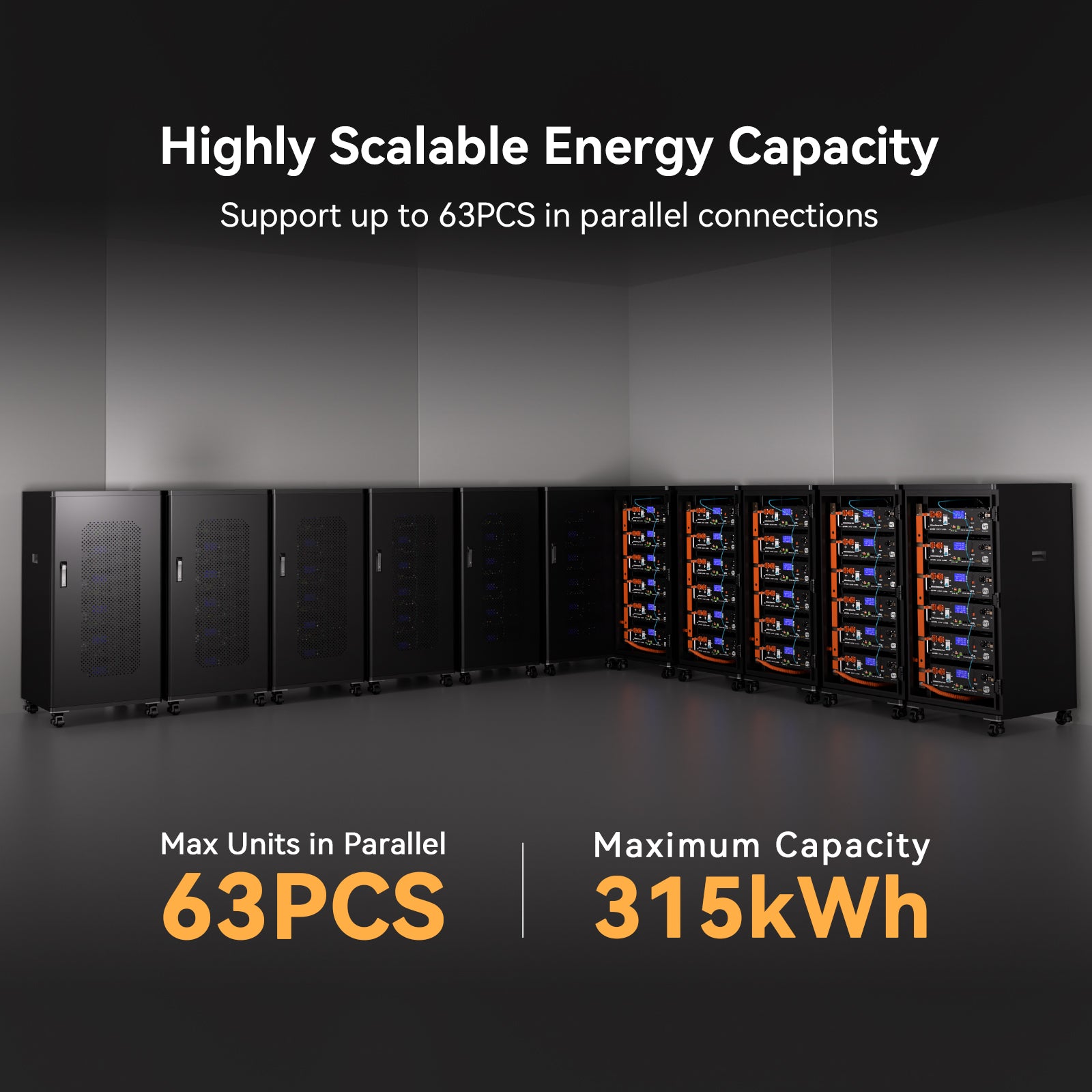
A modular approach can let a homeowner begin near the calculated requirement and expand as measured consumption becomes clearer. Expansion still requires planning. Confirm whether batteries of different ages may be paralleled, whether firmware and communication settings match, and whether the busbars, cables, fuses and rack are designed for the final module count.
How Much Solar PV Does the System Need?
Size the array from the month with the weakest useful solar resource, not the annual average and not the best summer month. Local shade, roof orientation, panel temperature, snow, dirt, wiring loss and inverter conversion all affect production. Use a reputable solar resource model and then have the site conditions checked by a qualified designer.
As a simple screening calculation, divide the daily energy that must be replaced by the worst-season peak sun hours and then divide again by the expected system efficiency. If the home needs ten kilowatt hours per day, receives three peak sun hours in the design month and the planning efficiency is seventy five percent, the screening result is about four and a half kilowatts of PV.
That result covers an average design day. An off-grid system may need additional array capacity to recover after a cloudy day while still serving current loads. The correct recovery margin depends on local weather sequences, battery charge limits, available mounting area and the backup strategy. More panels do not help if the charge controller or battery cannot accept the available power.
Check Worst-Season Shade and Weather
A tree, ridge or nearby building that has little effect in summer may block low winter sun for hours. Review the actual solar window in the design season. If the site experiences snow, persistent cloud or monsoon conditions, model those losses rather than applying a generic annual percentage.
Use monthly production estimates and compare the lowest months with the monthly load profile. Air conditioning may make summer the hardest period in one location, while heating, lighting and low sun may make winter harder in another.
Plan Battery Recharge Time
The array must cover current daytime loads before the remaining power can recharge the battery. If the battery is deeply discharged and the next day is only partly sunny, a system sized to the average daily load may not recover. Estimate how many good solar hours are needed to restore the planned discharge while the home continues operating.
Check the maximum PV input and charging current of the inverter or charge controller. Also check the battery bank's permitted charging current. The lowest verified limit controls the practical recharge rate.
When Does an Off-Grid System Need Generator Backup?
A generator is not a substitute for correct solar sizing, but it can be an economical resilience tool. It covers rare weather events, maintenance periods, unexpected guest loads and seasonal conditions that would otherwise force the owner to buy a much larger array and battery bank.
Choose a generator that can run the required emergency loads and support the inverter charger's input requirements. Confirm voltage, frequency, grounding, transfer behavior, charging settings and generator loading with the equipment manuals. Automatic start can be useful, but it must respond to a reliable condition and include safe stop logic.
Set a clear operating policy. For example, start backup charging before the battery reaches a critical state, run the generator at an efficient load, and stop after the battery reaches a practical recovery level rather than idling for a slow final charge. The exact thresholds must follow the verified battery and inverter requirements.
Real Off-Grid Sizing Scenarios
Small Cabin With Weekend Use
A small cabin with refrigeration, lights, a water pump and device charging may have low daily energy but a meaningful pump surge. The default direction is a modest battery bank, an inverter selected for the pump startup, and enough PV to recover during the occupied season. A portable or fixed generator can cover exceptional weather without forcing a large battery purchase.
Full-Time Home With Year-Round Loads
A full-time home needs a seasonal load audit. Refrigeration and pumps remain, while cooling, heating, lighting and occupancy can shift by month. The default direction is a modular battery bank sized for essential overnight and poor-weather demand, a hybrid inverter that handles overlapping household loads, and PV modeled for the hardest season. Backup charging reduces the cost of designing for the worst historical weather sequence.
Remote Property With Critical Water and Communications
When water, communications or security cannot stop, separate those circuits from discretionary loads. Give essential circuits a protected reserve and shed high-demand loads before the battery reaches a critical level. In this scenario, monitoring, alarms and a maintained backup generator can be as important as adding another battery module.
Recommended System Direction
For most new off-grid homes, begin with an efficient essential-load plan, choose the inverter from simultaneous demand, size the battery for one or two realistic autonomy days, and size PV from the weakest solar season with a recovery margin. Add generator backup when rare extended weather would otherwise make the battery and array uneconomically large.
After neutral sizing is complete, a modular 51.2 volt rack system such as the WT5100 can suit homeowners who expect future load growth or want to expand storage in measured stages. Review How to Choose the Right Home Energy Storage System before choosing rack capacity, and confirm every battery, inverter, communication and protection requirement before purchase.
Final Off-Grid Solar System Checklist
- Measure daily energy for essential, flexible and high-demand loads.
- Record simultaneous power and motor startup requirements.
- Select the inverter from verified continuous and surge performance.
- Choose autonomy based on local weather, access and backup availability.
- Calculate nominal battery capacity from verified usable energy and system losses.
- Model PV production for the weakest relevant month and actual site shade.
- Confirm that PV and backup charging can restore the battery bank.
- Verify battery communication, current limits, cables, busbars and protection.
- Define load shedding and generator start rules before commissioning.
- Ask a qualified installer to validate the final design and local requirements.
Use the completed load audit and monthly solar estimate to request a system design. This gives the installer evidence to verify the inverter, WT5100 module count, PV capacity and backup plan instead of relying on a package chosen from house size alone.
FAQ
How many solar panels do I need for an off-grid home?
The answer depends on daily energy use, worst-season solar hours, site losses and the required battery recovery time. Divide the energy that must be replaced by the weakest month's peak sun hours, adjust for system losses, and then verify the result with a site-specific production model.
How many days of battery backup should an off-grid system have?
One or two days is a practical starting range for many homes with reliable backup charging. Remote sites, severe weather and critical loads may justify more autonomy. The larger bank must still be rechargeable by the available PV array and backup source.
Should I size the inverter from daily kilowatt hours?
No. Size the inverter from the highest realistic simultaneous load and required startup surge. Daily kilowatt hours are used mainly for battery and solar energy sizing.
Can I add more batteries later?
Often, but only within the battery and inverter manufacturer's supported architecture. Confirm module age rules, firmware, communication, busbar capacity, cable size, overcurrent protection and the maximum permitted parallel count before expansion.
Can solar panels run an off-grid home without batteries?
Not reliably through changing clouds, night and startup events. A properly configured inverter and storage system stabilize supply and make solar energy available when production is below the load. A backup source may still be required for prolonged poor weather.
Is a generator necessary for an off-grid solar system?
It is not always necessary, but it is often practical. A generator can cover rare extended weather, unexpected loads and maintenance periods, allowing the solar array and battery bank to be sized for normal difficult conditions instead of the most extreme event.
How many WT5100 batteries do I need for an off-grid home?
Divide the required usable storage by the verified usable energy per module, then round up and check current, communication and parallel limits. Each WT5100 is positioned as a 51.2 volt, 100 amp hour module with approximately 5.12 kilowatt hours of nominal energy, but the current official data.

![[Pre-Order] IP65 Wirentech WP51314 51.2V 314Ah 16kWh Powerwall LiFePO4 Battery](http://wirentechshop.com/cdn/shop/files/WP51314.png?v=1779699725&width=1280)


![[Pre-Order] Wirentech 12kW Hybrid Solar Inverter with Bypass for Home Energy Storage](http://wirentechshop.com/cdn/shop/files/12bp_bdcf00b1-989c-4581-bd54-0974ab610f28.png?v=1788318623&width=2000)
![[Pre-Order] Wirentech 12kW Hybrid Solar Inverter with Bypass for Home Energy Storage](http://wirentechshop.com/cdn/shop/files/G01-purchase-overview-2000x2000_239b36c9-5789-4dde-ac70-4fa1f1710694.jpg?v=1788855790&width=2000)
![[Pre-Order] Wirentech 12kW Hybrid Solar Inverter with Bypass for Home Energy Storage](http://wirentechshop.com/cdn/shop/files/G02-application-fit-2000x2000_ed7587c3-7052-442c-8988-58b2b01e63c2.jpg?v=1788855790&width=2000)
![[Pre-Order] Wirentech 12kW Hybrid Solar Inverter with Bypass for Home Energy Storage](http://wirentechshop.com/cdn/shop/files/G03-solar-input-2000x2000_767280a4-e107-4dfe-9ecf-ae5577ec7c7c.jpg?v=1788855790&width=2000)


Share:
Is a 5.12kWh Rack Battery Enough for Home Backup?